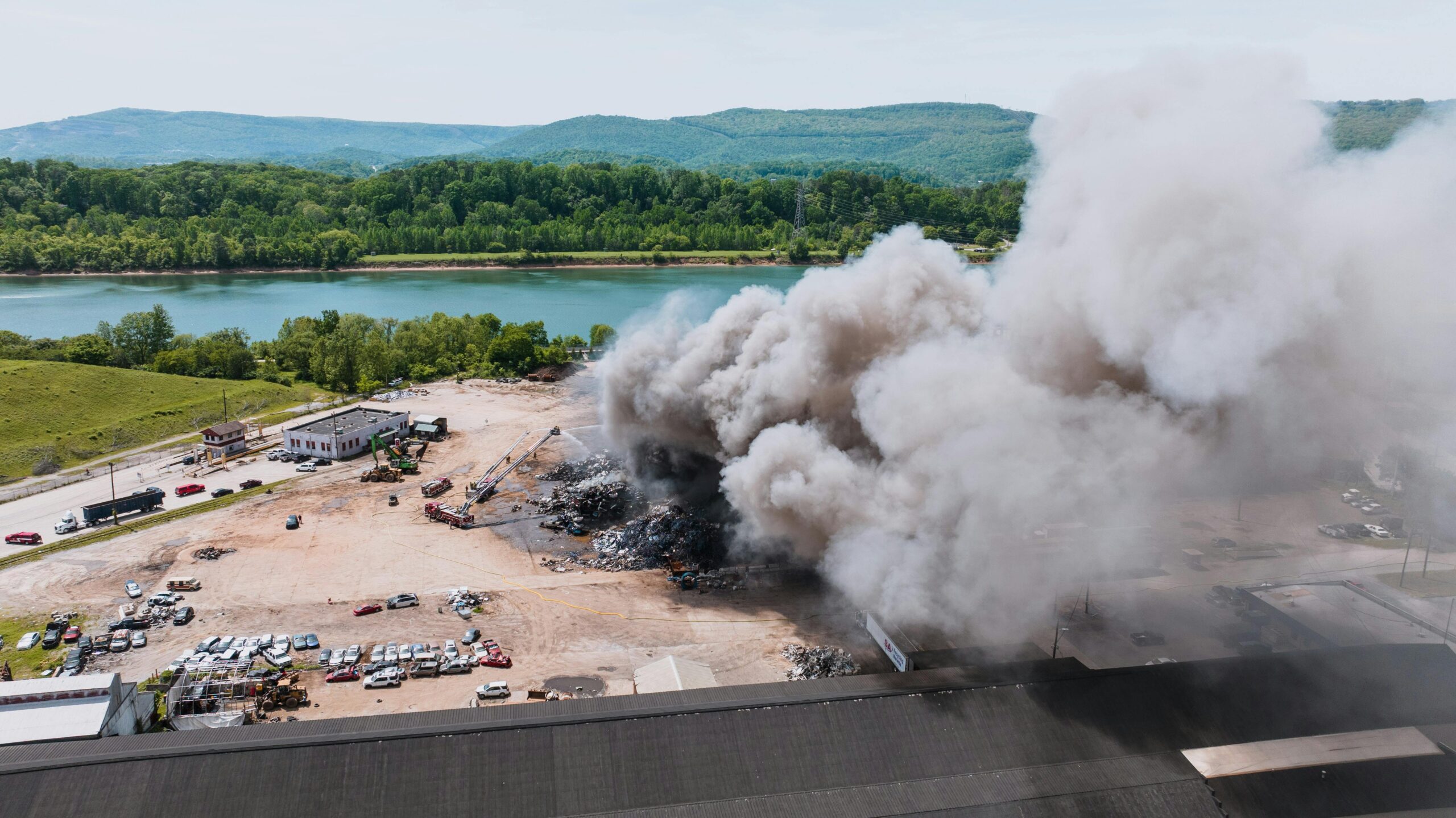
Fire safety technology is evolving rapidly, and probabilistic ember drift models are emerging as revolutionary tools that promise to transform how we predict, prevent, and respond to wildfire threats.

🔥 The Rising Need for Advanced Fire Prediction Systems
Wildfires have become increasingly devastating in recent years, causing billions of dollars in property damage, destroying ecosystems, and claiming lives across the globe. Traditional fire prediction methods, while valuable, often fall short when it comes to accurately forecasting one of the most unpredictable yet dangerous aspects of wildfire behavior: ember drift.
Ember drift, also known as spotting or firebranding, occurs when burning fragments are carried by wind currents away from the main fire front. These airborne embers can travel distances ranging from a few meters to several kilometers, igniting new fires far ahead of the primary blaze. This phenomenon has been responsible for some of the most catastrophic fire spread events in history, making it a critical factor in fire safety planning.
The challenge lies in the chaotic nature of ember transport. Wind patterns, ember size and shape, atmospheric conditions, fuel moisture, and terrain all interact in complex ways that defy simple prediction. This is where probabilistic ember drift models enter the picture, offering a sophisticated approach to understanding and forecasting this dangerous phenomenon.
Understanding the Science Behind Ember Drift Modeling
Probabilistic ember drift models represent a significant leap forward from deterministic approaches. Rather than attempting to predict a single outcome, these models acknowledge the inherent uncertainty in fire behavior and generate multiple possible scenarios, each with an associated probability.
The Core Components of Probabilistic Models
At their foundation, these models integrate several key elements that work together to create comprehensive risk assessments:
- Atmospheric dynamics: Wind speed, direction, turbulence, and vertical atmospheric structure all influence ember trajectories
- Ember characteristics: Size distribution, shape, density, and combustion state affect how embers behave in flight
- Ignition probability: The likelihood that a landing ember will successfully ignite new fuel sources
- Fuel bed properties: Vegetation type, moisture content, and arrangement determine receptivity to ember ignition
- Topographical features: Terrain elevation, slope, and aspect influence both wind patterns and ember landing zones
By incorporating probability distributions rather than single values for each parameter, these models capture the range of possible outcomes and their relative likelihoods. This probabilistic approach provides fire managers with actionable intelligence that accounts for uncertainty rather than ignoring it.
How Probabilistic Models Outperform Traditional Approaches 📊
The advantages of probabilistic ember drift models over conventional methods become apparent when examining their practical applications in real-world scenarios.
Enhanced Risk Assessment Capabilities
Traditional fire modeling often relies on worst-case scenarios or average conditions, neither of which adequately represents the full spectrum of potential outcomes. Probabilistic models generate risk maps that show not just where embers might land, but the probability of ignition at each location.
This nuanced information enables emergency managers to prioritize resources more effectively. High-probability ignition zones receive immediate attention, while moderate-risk areas can be monitored with appropriate levels of vigilance. This optimization of resource deployment can mean the difference between containing a fire early and watching it escalate into a major disaster.
Real-Time Adaptability and Dynamic Forecasting
Modern probabilistic ember drift models can assimilate real-time data from weather stations, satellites, and ground observations to continuously update predictions. As conditions change—wind shifts direction, humidity drops, or a fire’s intensity increases—the models recalculate probabilities and adjust risk assessments accordingly.
This dynamic capability is invaluable during active fire events, when conditions can change rapidly and decisions must be made quickly. Fire commanders can receive updated probability maps showing how changing conditions affect ember drift patterns, allowing for proactive rather than reactive decision-making.
Technological Integration: Making Models Accessible and Actionable
The most sophisticated model is only as useful as its accessibility to those who need it. Recent advances in computational power, data visualization, and mobile technology have made probabilistic ember drift models increasingly practical for operational use.
Cloud Computing and Processing Power
Running complex probabilistic simulations requires substantial computational resources. Cloud-based platforms now enable these calculations to be performed rapidly, with results delivered to users in minutes rather than hours. This speed is crucial during emergency situations when every minute counts.
The scalability of cloud computing also means that models can be run at multiple resolutions simultaneously—providing broad regional overviews while also generating high-resolution predictions for specific at-risk communities.
Visualization Tools That Empower Decision-Makers
Raw probability data is difficult for non-specialists to interpret. Modern visualization tools transform complex model outputs into intuitive maps, charts, and animations that clearly communicate risk levels and potential fire spread patterns.
These visualizations can be customized for different audiences—technical specialists might want detailed probability distributions, while community members need simple, clear guidance about their specific risk level. Interactive maps allow users to explore different scenarios and understand how changing conditions affect their personal safety.
🏘️ Real-World Applications Saving Lives and Property
The true value of probabilistic ember drift models emerges in their practical applications across various fire-prone regions and scenarios.
Urban-Wildland Interface Protection
The interface between developed areas and wildland vegetation represents one of the highest-risk zones for fire-related disasters. Homes and businesses in these areas face dual threats from advancing fire fronts and ember ignition.
Probabilistic models help communities in these vulnerable zones by identifying specific properties with elevated ember exposure risk. This information drives targeted mitigation efforts—homeowners can focus defensible space improvements on the most vulnerable aspects of their properties, and fire departments can pre-position resources in locations where ember-driven structure ignitions are most likely.
Critical Infrastructure Planning
Power transmission lines, water treatment facilities, communication towers, and other essential infrastructure require special protection from wildfire threats. Probabilistic ember drift models inform both the siting of new infrastructure and the hardening of existing facilities.
By understanding the probability of ember exposure at different locations, planners can make informed decisions about where to place new facilities or which existing sites require additional protective measures. This risk-based approach optimizes investment in infrastructure protection.
Evacuation Planning and Timing
One of the most critical decisions during a wildfire event is when to order evacuations. Too early, and communities suffer unnecessary disruption and may lose trust in future warnings. Too late, and lives are endangered.
Probabilistic ember drift models provide objective criteria for evacuation timing by forecasting when ember ignition probabilities in specific areas will exceed safe thresholds. This data-driven approach removes some of the subjective uncertainty from these life-or-death decisions.
Integration with Broader Fire Management Systems 🌐
Probabilistic ember drift models don’t exist in isolation—they’re most powerful when integrated into comprehensive fire management frameworks.
Multi-Model Ensemble Approaches
The most sophisticated fire management systems combine ember drift models with fire spread models, weather forecasts, fuel moisture predictions, and suppression resource tracking. This ensemble approach provides a holistic view of fire risk and behavior.
When ember drift predictions indicate high spotting potential ahead of a fire front, integrated systems can automatically alert suppression crews and suggest optimal positioning to intercept new ignitions before they establish. This level of coordination significantly enhances firefighting effectiveness.
Long-Term Planning and Mitigation
Beyond immediate fire response, probabilistic models inform long-term land management and mitigation strategies. Historical weather patterns can be used to generate seasonal or annual ember risk maps for specific regions.
These longer-term risk assessments guide fuel management priorities, building code requirements, vegetation management regulations, and community education programs. Communities with chronic high ember exposure can implement sustained mitigation efforts rather than scrambling to prepare when fires approach.
Challenges and Future Developments in Ember Drift Modeling
Despite their tremendous potential, probabilistic ember drift models still face several challenges that researchers and developers are actively working to address.
Data Requirements and Availability
Accurate probabilistic models require substantial input data—detailed fuel maps, high-resolution topography, comprehensive weather observations, and ember characteristics from actual fires. In many regions, particularly in developing nations, this data is incomplete or unavailable.
Efforts are underway to develop models that perform reliably with limited data inputs, using satellite observations and machine learning techniques to fill data gaps. These advances will make sophisticated ember drift modeling accessible to more communities worldwide.
Computational Demands and Speed Tradeoffs
There’s an inherent tension between model complexity and computational speed. More detailed physical representations produce more accurate predictions but take longer to run. During rapidly evolving fire situations, speed may be prioritized over precision.
Researchers are developing hybrid approaches that use simplified models for rapid initial assessments, then automatically trigger more detailed simulations for high-risk areas identified in the initial pass. This tiered approach balances speed with accuracy.
Validation and Continuous Improvement
Validating probabilistic predictions is challenging because they forecast probabilities rather than definite outcomes. A model might predict a 30% chance of ember ignition at a location, but whether ignition occurs in any single instance doesn’t definitively prove or disprove the model’s accuracy.
Validation requires comparing model predictions against large datasets of observed ember behavior across many fires. As more fires are documented with detailed observations, model accuracy continues to improve through machine learning and parameter refinement.
🎯 The Economic Impact of Improved Fire Prediction
The financial benefits of probabilistic ember drift models extend far beyond the direct costs of fire suppression.
Insurance companies are beginning to incorporate ember risk assessments into their underwriting processes, offering premium reductions for properties that implement targeted mitigation measures based on model predictions. This creates financial incentives for property owners to reduce their vulnerability.
Communities that use these models for planning and preparedness experience lower disaster recovery costs when fires do occur. Property losses are reduced through better preparation, evacuation efficiency improves, and post-fire rebuilding can begin more quickly when infrastructure protection has been prioritized effectively.
Economic analyses suggest that every dollar invested in sophisticated fire prediction technology, including ember drift modeling, returns between five and ten dollars in avoided losses and reduced suppression costs. This compelling return on investment is driving increased adoption of these technologies.
Training the Next Generation of Fire Management Professionals
As probabilistic ember drift models become standard tools in fire management, training programs are evolving to ensure professionals can effectively use these technologies.
Modern fire science education now includes coursework in probability and statistics, geospatial analysis, atmospheric science, and computational modeling. This interdisciplinary approach prepares fire managers to understand not just how to use these tools, but how they work and what their limitations are.
Professional development programs for experienced fire managers are helping bridge the knowledge gap, ensuring that those who’ve spent decades fighting fires can integrate new predictive technologies into their decision-making processes without abandoning the valuable experiential knowledge they’ve accumulated.
Looking Ahead: The Future of Fire Safety Technology 🚀
The rapid pace of advancement in probabilistic ember drift modeling shows no signs of slowing. Several emerging technologies promise to further enhance these capabilities in the coming years.
Artificial intelligence and machine learning are being trained on vast datasets of fire behavior observations, enabling models to identify patterns and relationships that might escape traditional physical modeling approaches. These AI-enhanced models may eventually predict ember behavior with unprecedented accuracy.
Drone technology is providing new ways to gather real-time data during fires, including ember generation rates, atmospheric conditions in the fire plume, and ignition patterns downwind. This data feeds directly into models, improving their accuracy when it matters most.
Satellite technology continues to advance, with new sensors providing more detailed observations of fire characteristics, vegetation conditions, and atmospheric properties. These space-based observations enable global-scale ember risk assessments that were impossible just years ago.
Empowering Communities Through Knowledge and Technology
Perhaps the most exciting aspect of probabilistic ember drift models is their potential to democratize fire safety information. When presented through accessible interfaces and clear visualizations, these tools empower individual property owners and community groups to understand and reduce their personal fire risk.
Public-facing applications are beginning to appear that allow homeowners to input their address and receive personalized ember risk assessments along with specific recommendations for mitigation actions. This direct connection between sophisticated modeling and individual action creates a new paradigm in fire safety.
Community organizations are using these tools to prioritize neighborhood fuel reduction projects, coordinate property hardening efforts, and develop localized evacuation plans that account for ember-driven ignition patterns specific to their area.
The transformation of fire safety technology through probabilistic ember drift models represents more than just a technical advancement—it signifies a fundamental shift in how we understand, prepare for, and respond to wildfire threats. By embracing uncertainty rather than ignoring it, providing actionable intelligence rather than simple warnings, and empowering everyone from incident commanders to individual homeowners, these models are genuinely changing the game in fire safety. As climate change continues to expand fire-prone areas and extend fire seasons, the tools we develop today will determine our resilience tomorrow. Probabilistic ember drift models stand at the forefront of this critical effort to protect lives, property, and the natural environment from one of nature’s most formidable forces.