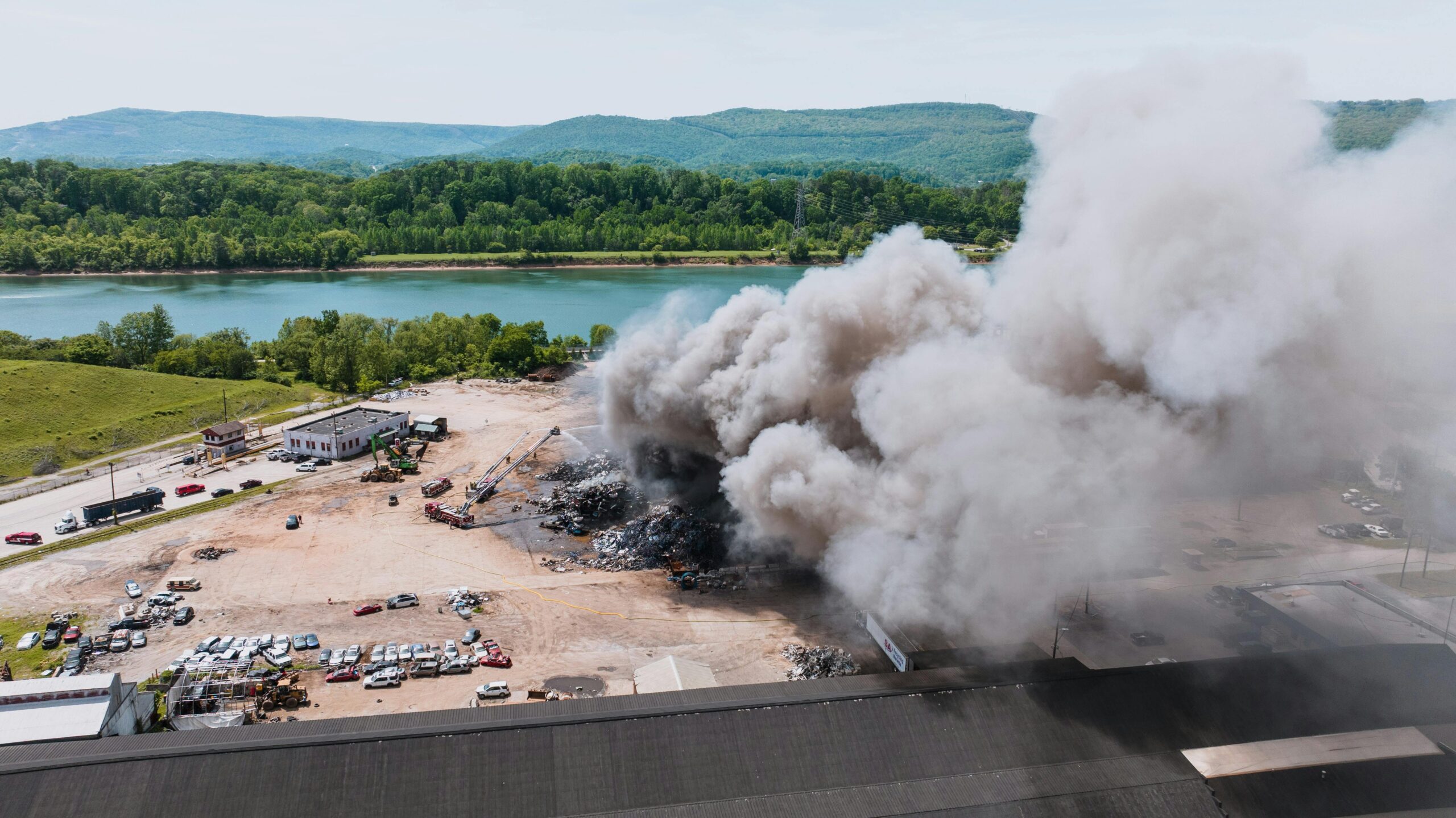
Flame modeling stands at the intersection of computational science, engineering precision, and real-world uncertainty, demanding rigorous approaches to achieve reliable predictions.

🔥 The Foundation of Flame Modeling in Modern Engineering
Flame modeling has become an indispensable tool in numerous industrial applications, from combustion engine design to aerospace propulsion systems. These computational frameworks attempt to capture the complex physics of reactive flows, where chemical kinetics, fluid dynamics, and heat transfer interact in intricate ways. The challenge lies not only in developing accurate models but also in understanding and quantifying the inherent uncertainties that arise from simplified assumptions, numerical approximations, and incomplete physical knowledge.
Engineers and researchers working with flame models must navigate a landscape filled with potential sources of error. These include turbulence-chemistry interactions, sub-grid scale phenomena, boundary condition approximations, and limitations in chemical mechanism representations. Each of these factors contributes to the overall uncertainty budget, making it essential to develop systematic approaches for error quantification and management.
The practical implications of flame modeling extend far beyond academic exercises. Industries rely on these simulations to optimize fuel efficiency, reduce emissions, ensure safety, and accelerate product development cycles. When uncertainty bounds are not properly characterized, the consequences can range from suboptimal designs to catastrophic failures in critical applications.
Understanding the Sources of Uncertainty in Combustion Simulations
Uncertainty in flame modeling originates from multiple sources, each requiring careful consideration and specialized treatment. Parametric uncertainty stems from imprecise knowledge of input parameters such as reaction rate constants, transport properties, and thermodynamic data. These values are typically determined through experimental measurements that carry their own measurement errors and limitations.
Model form uncertainty represents another significant challenge. This type of uncertainty arises when the mathematical models themselves provide only approximations of the true physical processes. For instance, turbulence models like Reynolds-Averaged Navier-Stokes (RANS) or Large Eddy Simulation (LES) introduce modeling assumptions that may not perfectly capture all flow phenomena under all conditions.
Numerical uncertainty emerges from the discretization of continuous equations into finite computational domains. Mesh resolution, time step sizes, and numerical schemes all introduce approximation errors that can accumulate and propagate through the simulation. Understanding these errors and their convergence behavior is crucial for establishing confidence in simulation results.
📊 Parametric Sensitivity and Its Impact
Parametric sensitivity analysis serves as a cornerstone technique for identifying which input parameters most significantly influence model outputs. By systematically varying input parameters and observing the resulting changes in predictions, researchers can prioritize uncertainty reduction efforts on the most influential factors. This approach not only improves computational efficiency but also guides experimental validation campaigns toward the most critical measurements.
Global sensitivity methods, such as Sobol indices or Morris screening, provide comprehensive insights into parameter interactions and non-linear effects. These techniques are particularly valuable in combustion modeling where chemical mechanisms may contain hundreds of species and thousands of reactions, each with associated kinetic parameters that could potentially influence flame behavior.
Mathematical Frameworks for Error Quantification
Quantifying uncertainty requires robust mathematical frameworks that can propagate input uncertainties through complex computational models. Monte Carlo methods represent the most straightforward approach, involving repeated model evaluations with randomly sampled input parameters drawn from specified probability distributions. While conceptually simple, this approach can become computationally prohibitive for expensive flame simulations.
Polynomial chaos expansion offers an efficient alternative by representing the stochastic response as a series of orthogonal polynomials. This spectral approach can dramatically reduce the number of required model evaluations while providing analytical expressions for statistical moments and sensitivity indices. The method works particularly well when uncertainties follow known probability distributions and when the response exhibits smooth dependence on input parameters.
Bayesian inference provides a powerful framework for combining simulation results with experimental observations, allowing systematic updating of parameter distributions and model form probabilities. This approach treats uncertainty quantification as an inverse problem, using available data to constrain the space of plausible model inputs and structures.
Verification and Validation: Twin Pillars of Confidence
Verification addresses the question: “Are we solving the equations correctly?” This process involves systematic checks of numerical implementation, including code verification through manufactured solutions, grid convergence studies, and comparison against analytical solutions where available. Verification establishes that the numerical algorithms faithfully represent the intended mathematical models.
Validation tackles the complementary question: “Are we solving the correct equations?” This requires comparison with experimental data under conditions relevant to the intended application. Validation experiments must be carefully designed to isolate specific physical phenomena and provide data with well-characterized measurement uncertainties.
🎯 Practical Strategies for Optimal Flame Modeling Results
Achieving optimal results in flame modeling requires a strategic approach that balances computational cost, accuracy requirements, and uncertainty tolerances. The first step involves clearly defining the quantities of interest—whether flame speed, extinction limits, pollutant emissions, or heat release rates. Different objectives may require different modeling fidelities and uncertainty quantification strategies.
Hierarchical modeling approaches leverage a spectrum of model complexities, from simple flamelet models to direct numerical simulations. Lower-fidelity models enable rapid exploration of parameter space and preliminary uncertainty quantification, while high-fidelity simulations provide detailed physics resolution for critical validation cases. This multi-fidelity strategy optimizes computational resource allocation.
Adaptive refinement techniques can automatically adjust mesh resolution, time stepping, or chemical mechanism complexity based on local error indicators. These methods ensure that computational effort is concentrated where it matters most, improving efficiency without sacrificing accuracy in regions of high sensitivity or sharp gradients.
Chemical Mechanism Reduction and Its Trade-offs
Detailed chemical mechanisms for practical fuels can involve thousands of elementary reactions, making their use in three-dimensional simulations computationally demanding. Mechanism reduction techniques such as directed relation graph methods, principal component analysis, or rate-controlled constrained equilibrium seek to eliminate non-essential species and reactions while preserving predictive accuracy for target quantities.
However, mechanism reduction introduces additional model form uncertainty. The reduced mechanism may perform well under the conditions used for its development but extrapolate poorly to different operating regimes. Rigorous uncertainty quantification must account for these limitations and establish validity domains for reduced models.
Advanced Techniques for Turbulent Flame Modeling
Turbulent flames present unique challenges due to the wide range of spatial and temporal scales involved and the non-linear coupling between turbulence and chemistry. The flame front becomes wrinkled and stretched by turbulent eddies, dramatically increasing the effective burning rate compared to laminar flames. Modeling these phenomena accurately requires sophisticated approaches that capture the relevant physics while remaining computationally tractable.
Flamelet models assume that the flame structure can be represented as an ensemble of laminar flame elements, characterized by a scalar field such as mixture fraction or progress variable. These models excel in computational efficiency but introduce assumptions about flame structure that may not hold in all regimes, particularly when extinction and reignition become important.
Transported probability density function methods offer a theoretically rigorous framework for turbulent combustion but come with significant computational costs. These approaches solve transport equations for the joint probability distribution of composition and temperature, naturally handling finite-rate chemistry effects without closure assumptions.
🌊 Large Eddy Simulation: Balancing Resolution and Cost
Large Eddy Simulation represents a middle ground between RANS and DNS, resolving large turbulent structures while modeling sub-grid scale effects. For combustion applications, LES requires appropriate closure models for the sub-grid scale reaction rate, which often represents the most uncertain component of the simulation.
Thickened flame models, flamelet progress variable approaches, and conditional moment closure each offer different strategies for bridging the scale gap between the computational mesh and the flame thickness. Evaluating these models under uncertainty quantification frameworks helps identify which approaches provide the most robust predictions across operating conditions.
Error Bounds and Confidence Intervals in Practice
Establishing meaningful error bounds requires careful consideration of all uncertainty sources and their propagation through the modeling chain. Confidence intervals should reflect both aleatory uncertainty (inherent randomness in physical systems) and epistemic uncertainty (incomplete knowledge that could potentially be reduced through better measurements or models).
Prediction intervals provide ranges within which future observations should fall with specified probability, accounting for model uncertainty, parameter uncertainty, and measurement variability. These intervals are essential for risk-informed decision making, particularly in safety-critical applications where conservative estimates may be necessary.
Credibility assessment involves comparing model predictions with experimental data while accounting for uncertainties in both. Validation metrics such as the area metric, reliability metric, or Bayesian hypothesis testing quantify the consistency between predictions and observations, providing objective measures of model adequacy.
Computational Cost Considerations and Resource Optimization
The computational expense of comprehensive uncertainty quantification can be substantial, particularly when coupling high-fidelity flame simulations with Monte Carlo sampling or optimization algorithms. Surrogate modeling techniques such as Gaussian process regression, neural networks, or proper orthogonal decomposition can drastically reduce this burden by creating fast-running approximations of expensive models.
These surrogate models learn the input-output relationship from a limited set of training simulations and can then be evaluated thousands or millions of times at negligible cost. The accuracy of surrogate predictions depends critically on the training data design and the complexity of the underlying response surface.
🚀 Future Directions and Emerging Technologies
Machine learning is increasingly being integrated into flame modeling workflows, from accelerating chemical kinetics calculations to developing data-driven closure models for turbulent combustion. Deep neural networks can learn complex non-linear relationships from high-fidelity simulation databases or experimental measurements, potentially capturing phenomena that traditional models struggle to represent.
However, machine learning models introduce new challenges for uncertainty quantification. Neural networks typically lack built-in uncertainty estimates and may extrapolate unpredictably outside their training domains. Research into Bayesian neural networks and uncertainty-aware architectures aims to address these limitations.
Quantum computing holds promise for certain combustion modeling tasks, particularly quantum chemistry calculations for reaction rate constants and molecular properties. While practical applications remain distant, ongoing developments in quantum algorithms could eventually transform how we approach fundamental uncertainty in chemical kinetics.
Integration of Multi-Scale Physics
Modern flame modeling increasingly requires integration across multiple scales, from molecular dynamics of fuel oxidation to macro-scale combustor performance. Multiscale uncertainty quantification frameworks must propagate uncertainties from atomistic simulations through continuum models, accounting for scale-dependent assumptions and approximations at each level.
Hybrid approaches that couple different modeling paradigms—such as combining DNS for flame region details with RANS for far-field flows—require careful treatment of interface conditions and consistency between models. Uncertainty in these coupling strategies can significantly impact overall prediction reliability.
Delivering Actionable Results to Stakeholders
Communicating uncertainty quantification results effectively to engineers, managers, and decision-makers requires translating statistical concepts into actionable insights. Visualization techniques such as confidence bands on performance curves, probability density functions for key outputs, and sensitivity rankings help stakeholders understand the reliability of predictions and identify areas requiring attention.
Decision-making under uncertainty often involves trade-offs between competing objectives, such as maximizing efficiency while minimizing emissions and ensuring robust performance across operating conditions. Multi-objective optimization under uncertainty provides frameworks for exploring these trade-offs systematically, generating Pareto fronts that reveal optimal design choices given uncertainty constraints.
Documentation standards for uncertainty quantification ensure reproducibility and facilitate knowledge transfer. Comprehensive reports should detail all uncertainty sources, quantification methods, validation data, and limitations, enabling independent assessment of result credibility and appropriate application of findings.

🎓 Building Competence in Uncertainty-Aware Flame Modeling
Developing expertise in flame modeling with proper uncertainty treatment requires interdisciplinary knowledge spanning combustion physics, computational fluid dynamics, numerical methods, statistics, and experimental diagnostics. Educational programs increasingly recognize this need, incorporating uncertainty quantification principles into combustion courses and computational engineering curricula.
Best practices include starting with simplified problems where analytical solutions or high-quality reference data exist, progressively advancing to more complex configurations. This approach builds intuition about model behavior, typical error magnitudes, and effective verification and validation strategies.
Collaboration between experimentalists and modelers proves essential for meaningful validation. Well-designed validation experiments provide boundary conditions, measurement uncertainties, and comparison data that enable rigorous model assessment. Conversely, modeling can guide experimental design toward conditions that provide maximum information for model improvement.
The flame modeling community continues to mature in its approach to uncertainty quantification, moving from deterministic predictions toward probability-informed assessments that better reflect the inherent limitations of computational models. This evolution strengthens the role of simulation in engineering decision-making, providing not just predictions but also the confidence bounds necessary for responsible application. By embracing uncertainty as an integral aspect of the modeling process rather than an inconvenient complication, researchers and practitioners can deliver results that are not only optimal but also trustworthy and actionable across diverse combustion applications.