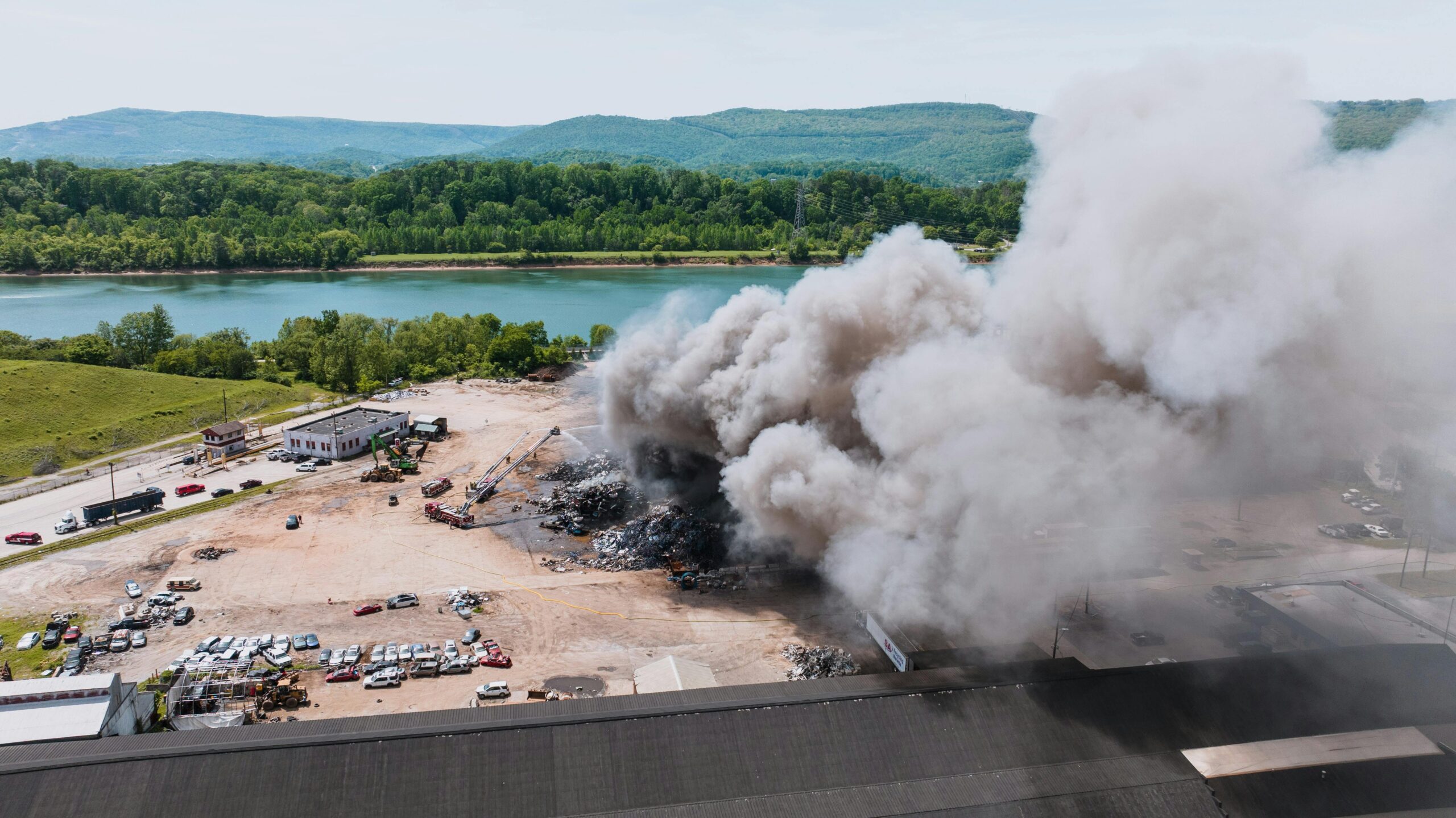
CFD technology revolutionizes combustion analysis by providing precise flame velocity estimations, enabling engineers to optimize industrial processes, enhance safety protocols, and reduce operational costs across multiple sectors.

🔥 Understanding the Critical Role of Flame Velocity in Industrial Applications
Flame velocity represents one of the most fundamental parameters in combustion science, directly influencing equipment design, operational safety, and energy efficiency. This critical measurement determines how quickly a flame front propagates through a combustible mixture, affecting everything from gas turbine performance to explosion prevention strategies in chemical plants.
Traditional experimental methods for measuring flame velocity often prove time-consuming, expensive, and potentially hazardous. Engineers historically relied on physical prototypes and extensive testing procedures that consumed significant resources while providing limited parametric flexibility. The emergence of Computational Fluid Dynamics has transformed this landscape entirely.
Modern CFD technology enables virtual experimentation across countless operating conditions without the inherent risks and costs associated with physical testing. This capability has become indispensable for industries ranging from automotive engineering to power generation, where combustion optimization directly translates to competitive advantages.
⚙️ The Fundamental Science Behind Flame Velocity Calculations
Flame velocity encompasses two distinct but related concepts that engineers must understand thoroughly. Laminar burning velocity refers to the speed at which an unstretched flame front advances through a quiescent fuel-air mixture under specified conditions. Turbulent flame speed, conversely, describes propagation rates in realistic flow conditions where turbulence significantly enhances mixing and reaction rates.
CFD simulations capture these phenomena by solving coupled equations governing fluid flow, heat transfer, and chemical reactions simultaneously. The Navier-Stokes equations describe fluid motion, while energy conservation equations track temperature distributions. Chemical kinetics models represent the complex reaction pathways that convert reactants into products, releasing energy in the process.
The accuracy of CFD predictions depends heavily on the fidelity of these submodels. Detailed chemical mechanisms might include hundreds or even thousands of elementary reactions for hydrocarbon fuels, though simplified schemes often provide acceptable accuracy with dramatically reduced computational costs. Selecting appropriate turbulence models represents another critical decision that affects simulation quality.
📊 Advantages of CFD-Based Flame Velocity Assessment
Implementing CFD technology for flame velocity estimation delivers multiple strategic advantages that justify the initial investment in software, hardware, and personnel training. Organizations that embrace this approach gain capabilities impossible to achieve through experimental methods alone.
Comprehensive Parametric Analysis Without Physical Prototypes
CFD enables engineers to explore vast design spaces systematically. A single simulation campaign can evaluate flame velocities across hundreds of equivalence ratios, pressures, temperatures, and fuel compositions. This thoroughness would be prohibitively expensive and time-consuming using experimental approaches, where each data point requires careful setup and instrumentation.
Virtual testing accelerates product development cycles dramatically. Engineers can identify optimal operating conditions, detect potential safety hazards, and refine designs before committing resources to physical prototypes. This front-loading of analysis reduces overall project risks while shortening time-to-market intervals.
Detailed Spatial and Temporal Resolution
CFD simulations provide complete three-dimensional flow field information at every computational cell and timestep. This granular detail reveals flame structure characteristics, turbulence-chemistry interactions, and transient phenomena that remain invisible to most experimental diagnostics. Engineers gain insights into the fundamental physics governing combustion processes in their specific applications.
Advanced visualization techniques transform raw simulation data into intuitive graphical representations. Contour plots reveal temperature and species concentration distributions, while vector fields illustrate flow patterns. Animation sequences capture dynamic flame behavior, making complex phenomena accessible to stakeholders across organizational levels.
Cost-Effective Safety Evaluations
Assessing explosive combustion scenarios experimentally poses obvious dangers and requires specialized facilities with stringent safety protocols. CFD eliminates these hazards entirely by conducting virtual experiments in perfectly safe computational environments. Engineers can investigate deflagration-to-detonation transitions, flame acceleration mechanisms, and blast wave propagation without physical risks.
This capability proves particularly valuable during process hazard analyses and facility siting studies. Simulation results inform protective measure designs, establish safe separation distances, and validate emergency response procedures, all while maintaining complete personnel safety throughout the analysis process.
🖥️ Essential Components of Effective CFD Flame Velocity Simulations
Successful CFD modeling requires careful attention to multiple interrelated factors. Understanding these components helps engineers configure simulations that balance accuracy against computational expense while addressing specific application requirements.
Computational Mesh Generation and Refinement
The computational domain must be discretized into numerous small cells where governing equations are solved. Mesh quality profoundly affects solution accuracy and convergence behavior. Regions with steep gradients—particularly near flame fronts—demand fine mesh resolution to capture physics correctly, while coarser meshes suffice in areas with gradual variations.
Adaptive mesh refinement techniques automatically increase cell density in critical regions as solutions evolve. This approach optimizes computational efficiency by concentrating resources where they provide maximum benefit. Engineers must verify mesh independence by demonstrating that further refinement produces negligible changes in predicted flame velocities.
Turbulence Modeling Strategies
Most practical combustion systems operate under turbulent conditions that dramatically affect flame propagation rates. Reynolds-Averaged Navier-Stokes models provide computationally efficient approximations by solving for time-averaged flow quantities with closure models representing turbulent fluctuations.
Large Eddy Simulation approaches resolve large-scale turbulent structures directly while modeling only the smallest eddies. This technique captures transient flame-turbulence interactions with greater fidelity than RANS methods but requires significantly more computational resources. Selection between these approaches depends on accuracy requirements, available computing power, and project timelines.
Chemical Kinetics Representation
Combustion chemistry ranges from simple global reactions to detailed mechanisms with thousands of elementary steps. Single-step mechanisms provide computational efficiency but lack predictive capability for pollutant formation or autoignition phenomena. Reduced mechanisms balance reasonable accuracy against computational tractability for many engineering applications.
Tabulated chemistry approaches precompute reaction rates across relevant thermochemical states, storing results in lookup tables accessed during simulations. Flamelet models assume flames consist of thin reaction zones characterized by simplified coordinate systems. These advanced techniques enable practical simulations of complex fuels that would be computationally prohibitive using detailed kinetics directly.
🎯 Practical Implementation Strategies for Maximum Accuracy
Translating CFD capabilities into reliable flame velocity predictions requires systematic approaches addressing validation, verification, and uncertainty quantification. Professional engineers follow established best practices to ensure simulation credibility.
Validation Against Experimental Benchmarks
All CFD models require validation against experimental data under well-characterized conditions. Fundamental flame configurations like one-dimensional premixed flames or counterflow flames provide ideal test cases where detailed measurements exist. Demonstrating agreement with these benchmarks establishes confidence in model implementations and parameter selections.
Validation exercises should span the operating range relevant to target applications. If simulations will predict flame velocities at elevated pressures, validation data at similar pressures becomes essential. Extrapolating far beyond validated conditions invites unreliable predictions that may mislead design decisions.
Sensitivity Analysis and Uncertainty Quantification
Input parameters like reaction rate constants, turbulence model coefficients, and boundary conditions all contain uncertainties that propagate through simulations to affect predicted flame velocities. Systematic sensitivity studies identify which parameters most strongly influence results, guiding efforts to refine input data quality.
Monte Carlo approaches and polynomial chaos expansions quantify output uncertainties resulting from input variations. These techniques provide confidence intervals around flame velocity predictions, enabling risk-informed decision making. Understanding prediction uncertainties proves just as important as obtaining best-estimate values.
Iterative Refinement and Convergence Verification
Numerical simulations introduce discretization errors that decrease as meshes are refined and timesteps reduced. Convergence studies demonstrate that solutions approach consistent values as numerical resolution increases. Grid convergence indices provide quantitative metrics for extrapolating to infinitely refined solutions.
Iterative solvers must also converge to stable solutions where residual errors fall below acceptable thresholds. Monitoring residual histories helps diagnose solution difficulties and assess whether simulations have reached converged states. Premature termination of unconverged simulations produces unreliable results regardless of model sophistication.
🏭 Industry-Specific Applications Transforming Operations
CFD-based flame velocity estimation delivers value across numerous industrial sectors, each with unique requirements and challenges. Understanding these applications illustrates the technology’s versatility and impact.
Gas Turbine Combustor Development
Modern gas turbines employ lean premixed combustion to minimize nitrogen oxide emissions while maintaining stable operation. Flame velocity predictions inform combustor geometry designs that prevent flashback into premixing sections while avoiding blowout under low-power conditions. CFD simulations evaluate flame anchoring mechanisms and stability limits across operating envelopes.
Manufacturers use these capabilities to reduce physical testing requirements during new engine development. Virtual prototyping accelerates design iterations while exploring unconventional configurations that might not receive consideration without computational guidance. This approach compresses development timelines and reduces certification costs.
Automotive Engine Optimization
Internal combustion engines demand precise control of flame propagation to maximize thermal efficiency and minimize emissions. CFD analysis reveals how combustion chamber shapes, spark plug locations, and charge motion patterns affect flame development rates. Engineers optimize these factors to reduce fuel consumption while meeting increasingly stringent regulatory requirements.
Emerging powertrain technologies including hydrogen engines and ammonia combustion systems rely heavily on CFD during development. Limited experimental databases for these alternative fuels make computational predictions especially valuable for exploring feasibility and identifying optimal operating strategies before committing to expensive prototype programs.
Process Safety and Explosion Mitigation
Chemical plants, refineries, and offshore platforms must assess explosion hazards associated with accidental fuel releases. CFD simulations predict flame acceleration rates in congested environments, overpressure developments, and mitigation system effectiveness. These analyses inform facility layouts, ventilation designs, and emergency response protocols.
Regulatory agencies increasingly accept CFD-based safety analyses as evidence of due diligence during permitting processes. Demonstrating thorough computational assessments of credible accident scenarios helps organizations obtain operating licenses while providing genuine safety improvements that protect personnel and assets.
🚀 Emerging Trends Expanding CFD Capabilities
Ongoing research and development continue expanding CFD capabilities for combustion analysis. Staying informed about these trends helps organizations maintain competitive advantages through early adoption of advanced techniques.
Machine Learning Integration
Artificial intelligence algorithms now augment traditional CFD approaches in several ways. Neural networks trained on detailed simulation data create fast-running surrogate models for real-time optimization applications. Machine learning also accelerates chemistry calculations by predicting reaction rates without solving detailed kinetic equations during simulations.
These hybrid approaches combine CFD accuracy with computational speeds approaching simple engineering correlations. Applications range from control system development to large-scale uncertainty quantification studies requiring thousands of individual simulations.
High-Performance Computing Advancements
Modern supercomputing clusters and cloud computing platforms enable simulations at unprecedented scales. Combustor geometries can be analyzed with billions of computational cells, capturing fine-scale turbulence structures and their interactions with flame fronts. Graphics processing units accelerate chemistry calculations, making detailed kinetic mechanisms practical for complex configurations.
These computational resources democratize advanced CFD capabilities, allowing smaller organizations to access technologies previously restricted to major corporations and national laboratories. Cloud-based platforms eliminate large capital investments in computing hardware while providing flexibility to scale resources based on project demands.
Multi-Physics Coupling
Comprehensive system analyses increasingly require coupling combustion CFD with structural mechanics, acoustics, and controls simulations. Co-simulation frameworks enable these multi-physics analyses where flame dynamics affect and respond to structural vibrations, acoustic oscillations, and control system interventions.
Such integrated approaches reveal system-level behaviors impossible to predict from isolated discipline analyses. They enable holistic optimizations considering interactions across physical domains, producing designs superior to those developed through sequential single-physics studies.
💡 Best Practices for Organizational Implementation
Successfully deploying CFD technology for flame velocity estimation requires more than software licenses. Organizations must develop comprehensive strategies addressing personnel, processes, and computational infrastructure.
Investing in staff training ensures engineers understand both CFD fundamentals and combustion physics deeply. Formal education through university courses or vendor training programs provides foundational knowledge, while mentorship from experienced practitioners accelerates practical skill development. Continuous learning remains essential as methodologies and software capabilities evolve.
Establishing standardized simulation workflows promotes consistency and quality across projects. Documentation templates capture modeling decisions, validation evidence, and uncertainty assessments systematically. Peer review processes catch errors before results influence critical decisions. These quality management practices build organizational credibility and stakeholder confidence.
Computational infrastructure requires careful planning balancing performance against costs. In-house clusters provide control and security for proprietary analyses, while cloud platforms offer flexibility and access to leading-edge hardware. Hybrid approaches leverage both options based on project characteristics and data sensitivity considerations.
🎓 Maximizing Return on CFD Technology Investment
Organizations maximizing CFD value integrate computational analyses throughout product lifecycles rather than treating simulations as isolated activities. Early-stage concept screening identifies promising approaches before detailed design work begins. Mid-stage optimizations refine geometries and operating conditions. Late-stage troubleshooting diagnoses unexpected behaviors in physical prototypes, accelerating issue resolution.
Building reusable simulation templates and automated workflows amplifies productivity gains. Parametric models allow rapid exploration of design variants without recreating entire simulations from scratch. Scripting interfaces enable batch processing of multiple configurations overnight, delivering results for morning review meetings.
Collaboration between CFD specialists and domain experts produces superior outcomes compared to isolated work. Combustion engineers provide physical insights guiding model selections and interpreting results. CFD analysts ensure numerical accuracy and apply best practices. This teamwork combines complementary expertise for maximum effectiveness.
The strategic implementation of CFD technology for flame velocity estimation transforms combustion system development across industries. Organizations embracing these capabilities gain competitive advantages through accelerated innovation cycles, reduced development costs, and enhanced product performance. As computational power continues increasing and methodologies mature, CFD’s role in combustion engineering will only expand further. Companies investing now in building internal expertise and establishing robust simulation workflows position themselves advantageously for future challenges requiring ever more sophisticated combustion system designs. The technology has evolved from a specialized research tool to an essential engineering capability that no competitive organization can afford to ignore in today’s demanding marketplace.