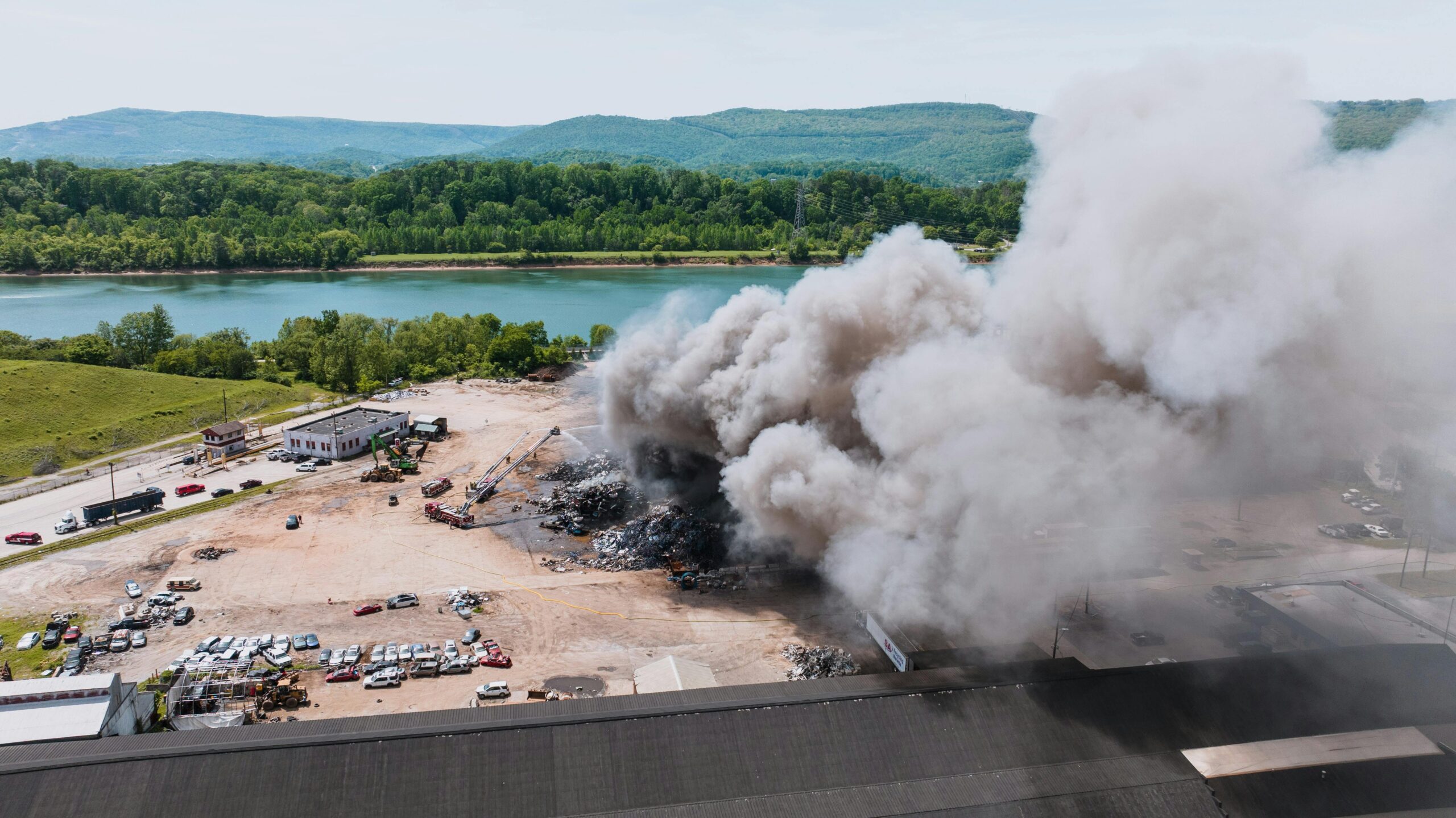
Smoke recognition technology stands at a critical crossroads where artificial intelligence meets real-world safety challenges, revealing hidden biases and data complexities that demand our attention.

🔍 The Rising Importance of Smoke Detection in Modern Safety Systems
As wildfires rage across continents and industrial accidents threaten communities worldwide, the demand for intelligent smoke detection systems has never been more urgent. These sophisticated technologies promise to revolutionize how we identify and respond to fire-related emergencies, potentially saving countless lives and billions in property damage.
Traditional smoke detectors have served us well for decades, but they operate on relatively simple principles—detecting particles or temperature changes in immediate proximity. Modern smoke recognition technology, however, leverages computer vision, machine learning, and artificial intelligence to identify smoke patterns from cameras and sensors across vast areas, offering unprecedented coverage and early warning capabilities.
Yet beneath this promising surface lies a complex web of challenges. The very algorithms designed to protect us carry inherent biases shaped by their training data, environmental assumptions, and design limitations. Understanding these challenges isn’t just an academic exercise—it’s essential for deploying systems that work reliably across diverse conditions and contexts.
🌫️ Understanding the Fundamentals of Smoke Recognition Systems
Smoke recognition technology typically employs convolutional neural networks (CNNs) and other deep learning architectures trained on thousands or millions of images. These systems learn to distinguish smoke from clouds, fog, dust, steam, and other visual phenomena that might confuse traditional sensors.
The process seems straightforward: feed the algorithm enough labeled images of smoke and non-smoke scenarios, and it learns to differentiate between them. However, the reality proves far more nuanced. Smoke behaves differently depending on what’s burning, weather conditions, time of day, and countless other variables.
Modern implementations often combine multiple data streams—visual imagery from cameras, thermal readings, air quality measurements, and meteorological data—to create more robust detection systems. This multimodal approach helps compensate for individual sensor limitations, but also introduces new layers of complexity and potential failure points.
📊 The Data Dilemma: Quality, Quantity, and Representation
The foundation of any machine learning system rests on its training data, and smoke recognition faces particularly acute challenges in this domain. Creating comprehensive datasets requires capturing smoke in myriad conditions—different fuel sources, weather patterns, landscapes, lighting conditions, and camera specifications.
Most existing datasets skew heavily toward certain scenarios. Controlled burns and industrial smoke dominate training sets, while underrepresented categories like residential fires in developing regions or smoke from specific vegetation types remain scarce. This imbalance doesn’t just limit performance—it creates systematic blind spots that can have life-or-death consequences.
Geographic and Environmental Bias in Training Data
Dataset creators typically gather images from accessible locations with existing monitoring infrastructure. This means temperate forests in North America, Europe, and Australia feature prominently, while tropical rainforests, savannah grasslands, and arctic tundra receive far less attention. The smoke characteristics in these underrepresented regions differ significantly from well-documented areas.
Urban versus rural contexts present another bias dimension. Smoke detection systems trained primarily on wilderness fire imagery may struggle with industrial settings, where emissions mix with existing air pollution, or dense urban environments where buildings obscure sight lines and create complex visual backgrounds.
Temporal Variations and Seasonal Challenges
Smoke behaves differently throughout the day and across seasons. Morning fog can resemble light smoke, while midday heat creates atmospheric distortions that challenge visual recognition. Winter conditions introduce frost, snow glare, and different combustion characteristics from those present during summer fire seasons.
Training datasets rarely capture this temporal diversity adequately. The logistics of gathering comprehensive data across all seasons, times of day, and weather conditions prove prohibitively expensive for most research teams and commercial developers. Consequently, systems may perform brilliantly during conditions matching their training data while failing catastrophically in underrepresented scenarios.
⚖️ Unpacking Algorithmic Bias in Smoke Detection
Bias in smoke recognition extends beyond training data to the algorithms themselves and the assumptions embedded in their design. These biases often remain invisible until systems deploy in real-world conditions, where their limitations become apparent—sometimes with devastating consequences.
Classification Bias and False Positive Tradeoffs
Every detection system faces the classic tradeoff between sensitivity and specificity. Set the threshold too low, and the system generates constant false alarms for fog, dust, or exhaust fumes, leading to alert fatigue and ignored warnings. Set it too high, and real fires go undetected until they’ve grown substantially.
Different stakeholders prefer different balance points. Industrial facilities might tolerate higher false positive rates to ensure no genuine fire goes undetected, accepting the cost of occasional false alarms. Wilderness monitoring systems, covering vast areas with limited response resources, might prioritize reducing false positives to avoid wasting precious firefighting capacity.
Cultural and Socioeconomic Dimensions
The deployment context introduces additional bias layers that technical solutions alone cannot address. Communities in wealthy nations enjoy dense sensor networks, rapid response capabilities, and redundant detection systems. Meanwhile, vulnerable populations in fire-prone regions of developing countries lack basic monitoring infrastructure, creating a protection gap that technology alone cannot bridge.
The types of structures and materials common in different regions also affect detection efficacy. Systems optimized for detecting smoke from wood-frame construction may perform differently when fires involve concrete, metal, or traditional building materials prevalent in non-Western contexts. Agricultural burning practices, common in many regions, can overwhelm systems not trained to distinguish between controlled burns and dangerous wildfires.
🌐 Environmental Variables That Challenge Recognition Systems
The natural world refuses to conform to neat algorithmic categories, presenting smoke recognition systems with endless edge cases and ambiguous scenarios that defy simple classification.
Weather Conditions and Atmospheric Phenomena
Fog, clouds, mist, and haze all share visual characteristics with smoke, creating persistent classification challenges. Humidity levels affect smoke dispersal patterns, while wind creates turbulence that breaks up the classic plume shapes algorithms learn to recognize. Precipitation can suppress visible smoke while fires continue burning, and atmospheric inversions trap smoke in unexpected patterns.
Dust storms, volcanic ash, industrial emissions, and pollen clouds add further complications. Each phenomenon has unique characteristics that experienced human observers might distinguish, but teaching these subtle differences to algorithms requires extensive training data that often doesn’t exist.
Light and Shadow Complexities
Computer vision systems depend heavily on lighting conditions, and smoke detection proves particularly sensitive to illumination challenges. Backlighting can make thin smoke invisible while creating false-positive shadows. Direct sunlight creates glare that obscures smoke, while low-angle morning or evening light casts long shadows that algorithms might misinterpret.
Nighttime detection introduces different problems entirely. Thermal cameras help identify heat signatures, but visible smoke becomes difficult to detect without adequate lighting. Urban light pollution, moonlight, and artificial illumination create varying conditions that systems must navigate successfully.
🔧 Technical Limitations and Hardware Constraints
Even perfect algorithms struggle when working with imperfect sensors and real-world hardware limitations. The camera specifications, positioning, maintenance status, and network connectivity all influence system performance in ways that laboratory testing rarely captures.
Image resolution determines the minimum detectable smoke quantity and distance. Low-resolution cameras miss thin smoke or distant fires, while high-resolution systems generate enormous data volumes that strain processing capabilities and network bandwidth. Camera positioning creates blind spots, and lens contamination from dust, pollen, or the very smoke they’re meant to detect degrades performance over time.
Processing power limitations force tradeoffs between algorithm sophistication and response speed. Edge computing devices deployed in remote locations lack the computational resources of centralized data centers, requiring simplified models that sacrifice accuracy for speed and energy efficiency.
📱 Democratizing Detection Through Mobile Technology
Smartphone applications have emerged as potential democratizing forces in smoke detection, enabling citizen scientists and concerned residents to contribute to early warning systems. These crowdsourced approaches help address data scarcity and geographic bias while engaging communities directly in fire prevention efforts.
Several applications leverage smartphone cameras to identify potential smoke, reporting observations to centralized databases that supplement professional monitoring systems. This approach dramatically expands detection coverage while generating diverse training data from previously underrepresented regions and contexts.
🎯 Addressing Bias Through Diverse Datasets and Inclusive Design
Recognizing these biases represents the first step toward mitigation. The smoke recognition community has begun implementing strategies to create more representative datasets and robust algorithms that perform reliably across diverse conditions.
Synthetic Data Generation and Augmentation
Computer graphics and simulation technologies enable researchers to generate synthetic smoke imagery covering scenarios difficult or dangerous to capture naturally. These techniques help fill dataset gaps, though they introduce new questions about whether simulated smoke adequately represents real-world complexity.
Data augmentation applies transformations to existing images—adjusting brightness, adding noise, simulating different weather conditions—to artificially expand dataset diversity. While helpful, augmentation cannot fully substitute for genuine samples from underrepresented contexts.
Transfer Learning and Domain Adaptation
Transfer learning techniques allow models trained on abundant data from one domain to adapt to related domains with limited examples. A system trained extensively on forest fire smoke might transfer that knowledge to detect agricultural burning or industrial emissions with relatively few additional training samples.
Domain adaptation explicitly addresses the distribution mismatch between training and deployment environments, adjusting algorithms to perform well even when real-world conditions differ from training scenarios. These approaches show promise for extending system capabilities beyond their original training contexts.
🤝 Collaborative Approaches and Stakeholder Engagement
Technical solutions alone cannot overcome the complex challenges facing smoke recognition technology. Effective systems require collaboration between technologists, firefighters, community members, policymakers, and domain experts who understand local contexts and needs.
Indigenous communities with generations of fire management experience offer invaluable knowledge about smoke characteristics, seasonal patterns, and landscape-specific risks that algorithms should incorporate. Firefighters provide practical feedback about detection thresholds, false alarm tolerances, and response capabilities that should inform system design decisions.
Regulatory frameworks must evolve alongside technology, establishing standards for performance testing across diverse conditions, transparency requirements for algorithm training data, and accountability mechanisms when systems fail. Public-private partnerships can pool resources for comprehensive dataset creation that individual organizations cannot afford independently.
🔮 The Path Forward: Building More Equitable Detection Systems
The future of smoke recognition technology depends on our willingness to confront its limitations honestly and work systematically to address them. This requires sustained investment in diverse datasets, inclusive design processes, and continuous performance evaluation across varied contexts.
Research priorities should shift toward underrepresented scenarios—developing-world contexts, non-traditional fuel sources, extreme weather conditions, and complex urban environments. Funding mechanisms must incentivize comprehensive data collection rather than quick wins on narrow benchmarks that don’t reflect real-world deployment challenges.
Algorithm developers should embrace ensemble approaches that combine multiple detection methods, each compensating for others’ weaknesses. Human-AI collaboration frameworks allow experienced observers to override or refine algorithmic outputs, leveraging both machine speed and human contextual understanding.
💡 Lessons Beyond Smoke: Implications for AI Safety Systems
The challenges facing smoke recognition technology illuminate broader issues affecting all AI systems deployed for safety-critical applications. Whether detecting medical conditions, identifying security threats, or monitoring infrastructure, these systems inherit biases from their training data and design assumptions.
The smoke recognition case study demonstrates that achieving equitable AI performance requires deliberate effort—diverse teams, representative datasets, inclusive testing protocols, and ongoing monitoring after deployment. Technical excellence alone proves insufficient without attention to social context, stakeholder needs, and systematic bias mitigation.
As AI systems assume ever-greater responsibility for protecting lives and property, the lessons from smoke detection become increasingly urgent. We must demand transparency about training data sources, performance variation across different populations and contexts, and clear accountability when systems fail.

🌟 Illuminating the Path Through the Smoke
Smoke recognition technology holds tremendous promise for enhancing fire safety and emergency response capabilities worldwide. However, realizing this potential requires acknowledging and actively addressing the biases and data challenges that currently limit system effectiveness and equity.
By diversifying training datasets, engaging stakeholders from underrepresented communities, developing robust algorithms that perform across varied conditions, and maintaining transparency about system limitations, we can build detection technologies that truly serve all populations equally. The smoke signals we need to uncover aren’t just those warning of fire—they’re the indicators of bias and inequality embedded within our technological solutions themselves.
The journey toward equitable smoke recognition systems mirrors broader challenges facing artificial intelligence deployment in safety-critical domains. Success requires technical innovation, certainly, but also humility about our limitations, commitment to inclusive design, and sustained investment in understanding the diverse contexts where these systems must operate reliably. Only by navigating these challenges thoughtfully can we ensure that our smoke detection technologies protect all communities effectively, regardless of geography, socioeconomic status, or environmental conditions.