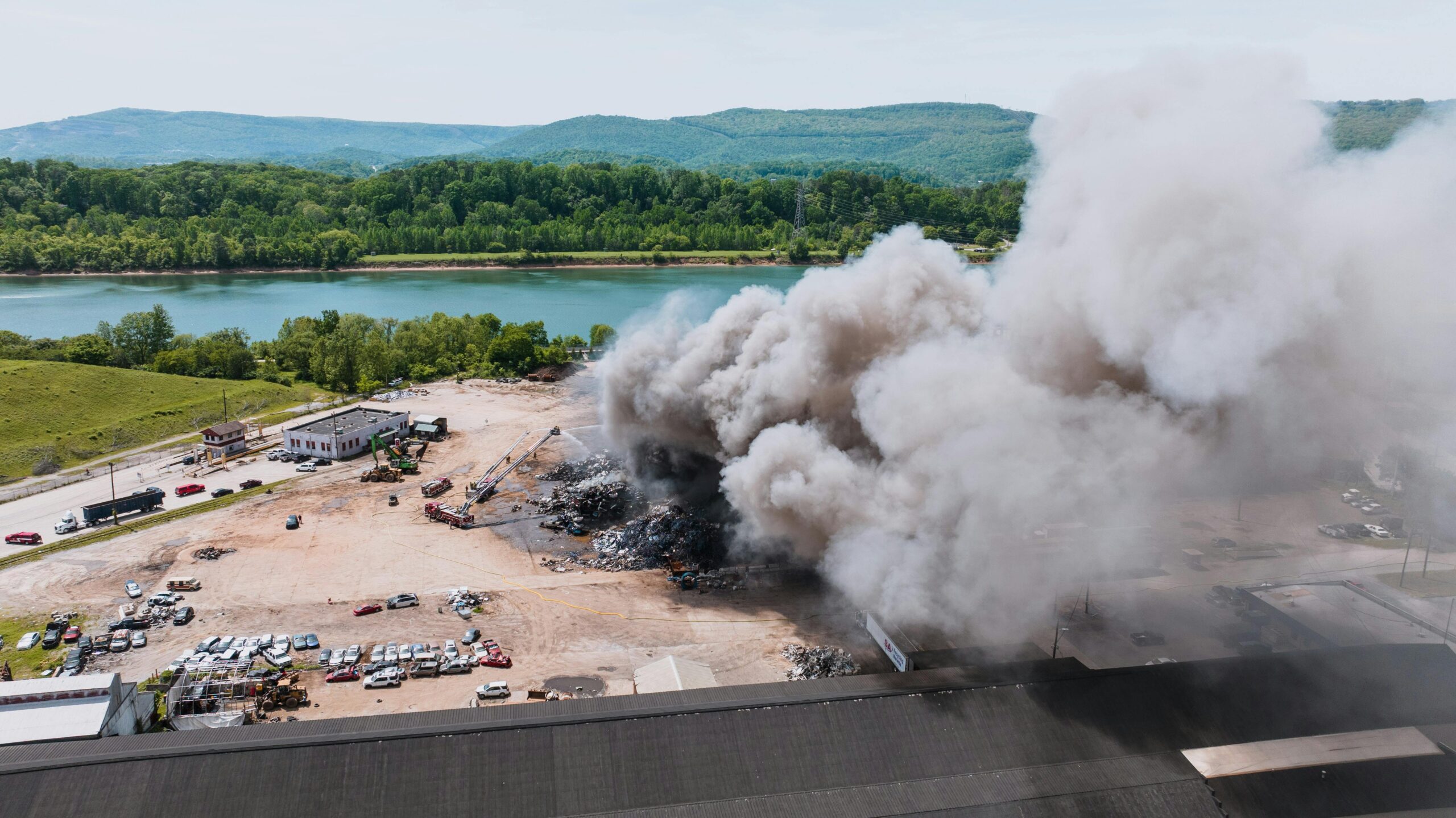
Smoke photography presents a unique challenge in digital imaging, where ephemeral wisps and swirls create mesmerizing patterns that captivate viewers through their organic, unpredictable beauty and complex textural qualities.

🌫️ The Allure of Smoke in Digital Imagery
Smoke has long fascinated photographers and visual artists due to its transient nature and the infinite variety of shapes it creates. From commercial product photography to fine art installations, smoke imagery offers a rich canvas for exploration. The delicate tendrils and flowing formations possess an inherent aesthetic quality that transforms ordinary photographs into extraordinary visual experiences.
Understanding smoke as a photographic subject requires appreciation for its physical properties. Smoke particles scatter light in complex ways, creating gradients, edges, and volumetric forms that challenge traditional image processing techniques. These characteristics make smoke an ideal subject for studying advanced feature extraction methods in computer vision and image analysis.
The beauty of smoke lies not just in its visual appeal but in the technical opportunities it presents. Each wisp contains information about texture, motion, density, and spatial distribution—all elements that modern image processing techniques can identify, isolate, and enhance for various applications.
Understanding Texture in Smoke Photography
Texture represents one of the fundamental characteristics that define visual perception in images. In smoke photography, texture manifests through the interplay of light and shadow across particle distributions, creating patterns that range from smooth gradients to sharp, turbulent structures.
The texture of smoke images differs significantly from conventional photographic subjects. Unlike solid objects with consistent surface properties, smoke exhibits dynamic, volumetric texture that changes based on lighting conditions, background contrast, and particle density. This variability makes smoke an excellent test case for robust feature extraction algorithms.
When analyzing smoke textures, we observe several distinct characteristics: smoothness in areas of low turbulence, graininess where particle density varies, directional flow patterns indicating movement, and edge sharpness where smoke contrasts against backgrounds. Each of these elements contributes to the overall textural signature of smoke imagery.
Key Textural Properties of Smoke
Identifying the specific properties that make smoke textures unique helps in developing targeted extraction techniques. These properties include spatial frequency distribution, directional orientation, contrast variation, and pattern regularity. Understanding these elements forms the foundation for effective feature extraction workflows.
Spatial frequency refers to how quickly texture changes across an image area. Smoke typically exhibits mid-to-high frequency variations, with fine details in turbulent regions and smoother transitions in calmer areas. This frequency diversity requires multi-scale analysis approaches for comprehensive feature capture.
Classical Feature Extraction Methods for Smoke Textures
Traditional computer vision offers several powerful techniques for extracting texture features from smoke imagery. These methods have proven effective across various applications and serve as fundamental tools in any image analysis toolkit.
Gray-Level Co-occurrence Matrix (GLCM)
The GLCM approach examines spatial relationships between pixel intensities to quantify texture. For smoke images, GLCM captures properties like homogeneity, contrast, energy, and correlation. These statistical measures describe how pixel values distribute across the image, providing numerical representations of textural characteristics.
When applying GLCM to smoke photography, selection of appropriate distance and angle parameters becomes crucial. Smoke patterns often display directional preferences based on air flow, making angle-specific analysis particularly valuable. Computing GLCM features across multiple orientations yields comprehensive texture descriptions that account for smoke’s directional nature.
Local Binary Patterns (LBP)
LBP represents another classical technique particularly suited to texture analysis. This method compares each pixel with its neighbors, creating binary patterns that describe local texture structure. For smoke images, LBP effectively captures the micro-patterns that distinguish different smoke densities and formation stages.
The rotation-invariant variants of LBP prove especially useful for smoke analysis, as smoke formations appear at various orientations within images. Extended LBP variants that consider larger neighborhoods can capture the broader structural patterns characteristic of smoke plumes and wisps.
Gabor Filters
Gabor filters combine frequency and spatial domain analysis, making them excellent tools for extracting oriented texture features. These filters respond to specific frequencies and orientations, allowing detailed characterization of directional patterns in smoke imagery.
A typical Gabor filter bank contains filters tuned to multiple scales and orientations. When convolved with smoke images, these filters produce response maps highlighting texture energy at different frequency-orientation combinations. The resulting feature vectors capture both the fine details and broader structural elements of smoke textures.
🔬 Advanced Deep Learning Approaches
Modern deep learning techniques have revolutionized feature extraction, offering capabilities that surpass traditional methods in many applications. Convolutional neural networks (CNNs) automatically learn hierarchical feature representations directly from image data, eliminating the need for manual feature engineering.
Pre-trained CNN architectures like VGG, ResNet, and Inception excel at extracting generic image features that transfer well across domains. When applied to smoke imagery, these networks capture complex patterns and relationships that traditional methods might miss. The intermediate layers of such networks encode progressively abstract representations, from edge-like features to high-level structural patterns.
Transfer Learning for Smoke Texture Analysis
Transfer learning leverages knowledge gained from large-scale image datasets to improve performance on specialized tasks. For smoke texture analysis, this approach proves particularly valuable given the limited availability of annotated smoke datasets.
By fine-tuning pre-trained networks on smoke-specific imagery, practitioners can achieve excellent feature extraction performance with relatively small training sets. The lower layers retain general edge and texture detection capabilities while upper layers adapt to smoke-specific patterns and structures.
Autoencoders and Feature Learning
Autoencoder architectures learn compressed representations of input data through unsupervised training. For smoke textures, autoencoders discover latent features that capture the essential characteristics needed to reconstruct the original images. These learned features often correspond to meaningful visual properties like density variations, flow patterns, and structural complexity.
Variational autoencoders (VAEs) extend this concept by learning probabilistic feature distributions. This capability enables generation of new smoke-like textures and provides robust feature representations that account for the natural variability in smoke formations.
Practical Implementation Strategies 💻
Implementing effective feature extraction pipelines requires careful consideration of preprocessing, algorithm selection, and parameter optimization. Success depends on matching techniques to specific application requirements and image characteristics.
Preprocessing for Optimal Results
Quality feature extraction begins with proper image preprocessing. For smoke photography, this typically includes background subtraction to isolate smoke regions, contrast enhancement to emphasize subtle texture variations, and noise reduction to eliminate artifacts that could confuse feature extraction algorithms.
Histogram equalization often improves feature extraction performance by expanding the dynamic range of smoke regions. However, aggressive equalization can introduce artifacts, so careful parameter tuning proves essential. Adaptive techniques that adjust locally based on image content generally produce superior results.
Multi-Scale Analysis
Smoke textures contain information across multiple spatial scales, from fine particle details to broad plume structures. Effective feature extraction captures this multi-scale nature through pyramid decomposition, wavelet analysis, or multi-resolution CNN architectures.
Scale-space representation techniques create image hierarchies where each level captures features at different resolutions. Combining features across scales produces comprehensive texture descriptions that remain robust to variations in viewing distance and image resolution.
Applications Beyond Aesthetics
While smoke photography offers visual appeal, the techniques for extracting texture features extend to numerous practical applications. Understanding these applications demonstrates the real-world value of mastering feature extraction methods.
Fire and Smoke Detection Systems
Automated fire detection systems rely on accurate smoke identification in surveillance video. Feature extraction techniques distinguish smoke from fog, clouds, dust, and other visual phenomena that might trigger false alarms. Texture-based approaches analyze temporal patterns and spatial distributions to reliably identify genuine smoke occurrences.
Modern smoke detection systems combine multiple feature types—texture, color, motion, and shape—to achieve high accuracy. Machine learning classifiers trained on extracted features make real-time decisions about alarm activation, balancing sensitivity and specificity for optimal performance.
Environmental Monitoring
Satellite and aerial imagery analysis for pollution monitoring benefits from advanced texture extraction techniques. Identifying industrial emissions, wildfire smoke, and atmospheric particulates requires distinguishing subtle texture differences in large-scale images.
Feature extraction algorithms process multispectral imagery to characterize smoke density, composition, and movement patterns. These capabilities support air quality assessment, regulatory compliance monitoring, and public health protection efforts.
Visual Effects and Gaming
The entertainment industry extensively uses smoke textures in visual effects and game development. Feature extraction techniques inform procedural generation algorithms that create realistic smoke simulations. Analysis of real smoke imagery guides parameter selection for particle systems and volumetric rendering engines.
Texture synthesis methods use extracted features to generate unlimited variations of smoke-like patterns. These synthesized textures maintain the visual characteristics of real smoke while offering artistic control and computational efficiency.
🎨 Enhancing Creative Photography Workflows
Professional photographers and digital artists increasingly incorporate computational techniques into creative workflows. Feature extraction methods inform selective editing, style transfer, and compositional analysis for smoke photography.
Texture-aware editing tools use feature extraction to identify smoke regions automatically, enabling targeted adjustments without manual masking. This automation accelerates post-processing while maintaining precise control over final results.
Style Transfer and Artistic Rendering
Neural style transfer algorithms leverage deep feature extraction to blend the aesthetic qualities of different images. Applying artistic styles to smoke photography creates unique visual effects that combine photographic realism with painterly or illustrative qualities.
The success of style transfer depends on extracting content and style features separately. Content features preserve smoke structure while style features capture artistic characteristics from reference images. Balancing these components produces compelling results that maintain recognizable smoke forms while exhibiting desired artistic qualities.
Optimizing Feature Selection and Dimensionality
Comprehensive feature extraction often produces high-dimensional representations that include redundant or irrelevant information. Effective workflows incorporate dimensionality reduction and feature selection techniques to identify the most informative characteristics.
Principal Component Analysis (PCA) transforms correlated features into uncorrelated principal components ordered by variance. Retaining only the top components reduces dimensionality while preserving most texture information. This compression accelerates downstream processing and improves machine learning model performance.
Alternative techniques like t-SNE and UMAP provide non-linear dimensionality reduction that preserves local neighborhood relationships. These methods prove valuable for visualizing high-dimensional texture features and identifying natural groupings in smoke imagery datasets.
Feature Importance Analysis
Understanding which features contribute most to specific tasks guides algorithm refinement and computational optimization. Feature importance metrics from machine learning models reveal which texture characteristics matter most for classification, segmentation, or retrieval applications.
Recursive feature elimination systematically removes less important features, identifying minimal subsets that maintain performance. This approach produces efficient feature sets tailored to specific applications while providing insights into the underlying texture properties that define smoke imagery.
Future Directions in Smoke Texture Analysis 🚀
The field of texture extraction continues evolving rapidly with advances in deep learning, computational resources, and algorithmic innovation. Several emerging trends promise to enhance smoke analysis capabilities significantly.
Vision transformers represent a paradigm shift from convolutional architectures, using attention mechanisms to capture long-range dependencies in images. For smoke textures, this capability may better model the global flow patterns and structural coherence that characterize smoke formations.
Self-supervised learning techniques train feature extractors without manual annotations by solving pretext tasks. These methods could unlock the wealth of unlabeled smoke imagery available online, creating powerful feature extractors trained on diverse smoke appearances and contexts.
Real-Time Processing and Edge Computing
Deploying texture analysis on edge devices enables real-time smoke detection in cameras, drones, and IoT sensors. Optimized feature extraction algorithms running on embedded processors bring advanced computer vision capabilities to resource-constrained platforms.
Model compression techniques like quantization, pruning, and knowledge distillation reduce computational requirements while maintaining accuracy. These optimizations make sophisticated texture analysis practical for mobile and embedded applications.
Building Your Feature Extraction Toolkit
Mastering smoke texture analysis requires combining theoretical knowledge with practical experience. Building a comprehensive toolkit involves selecting appropriate libraries, developing reusable code modules, and establishing validation workflows.
Python’s scientific computing ecosystem provides excellent resources for feature extraction. Libraries like OpenCV, scikit-image, and scikit-learn implement classical techniques, while TensorFlow and PyTorch enable deep learning approaches. These tools offer production-ready implementations with extensive documentation.
Developing modular code that separates preprocessing, feature extraction, and post-processing stages promotes reusability and experimentation. Well-structured pipelines facilitate comparing different techniques and optimizing parameters for specific smoke imagery characteristics.
Validation and Performance Metrics
Rigorous validation ensures extracted features effectively capture meaningful texture information. For supervised applications, standard metrics like accuracy, precision, and recall quantify classification performance. For unsupervised scenarios, clustering quality measures and reconstruction errors assess feature quality.
Creating benchmark datasets with ground truth annotations enables systematic comparison of different extraction techniques. These benchmarks should include diverse smoke types, lighting conditions, and backgrounds to ensure robust evaluation across realistic scenarios.

Transforming Theory into Practice 🎯
The journey from understanding feature extraction concepts to implementing effective smoke texture analysis systems requires deliberate practice and iterative refinement. Starting with simple techniques and progressively incorporating more sophisticated methods builds both skills and intuition.
Experimenting with various smoke imagery sources—from controlled studio photography to wild fire footage—exposes the range of challenges real-world applications present. Each image type reveals different texture characteristics and processing requirements, broadening technical capabilities.
Collaboration within the computer vision community accelerates learning and innovation. Sharing code, datasets, and insights through open-source platforms and research publications advances the collective understanding of smoke texture analysis while fostering individual growth.
The intersection of artistic appreciation and technical mastery creates opportunities for genuinely captivating work. By unveiling the hidden patterns within smoke through sophisticated feature extraction, practitioners transform ephemeral wisps into structured data that serves both aesthetic and practical purposes. This synthesis of art and science exemplifies the powerful potential of modern image processing techniques when applied thoughtfully to nature’s most elusive subjects.