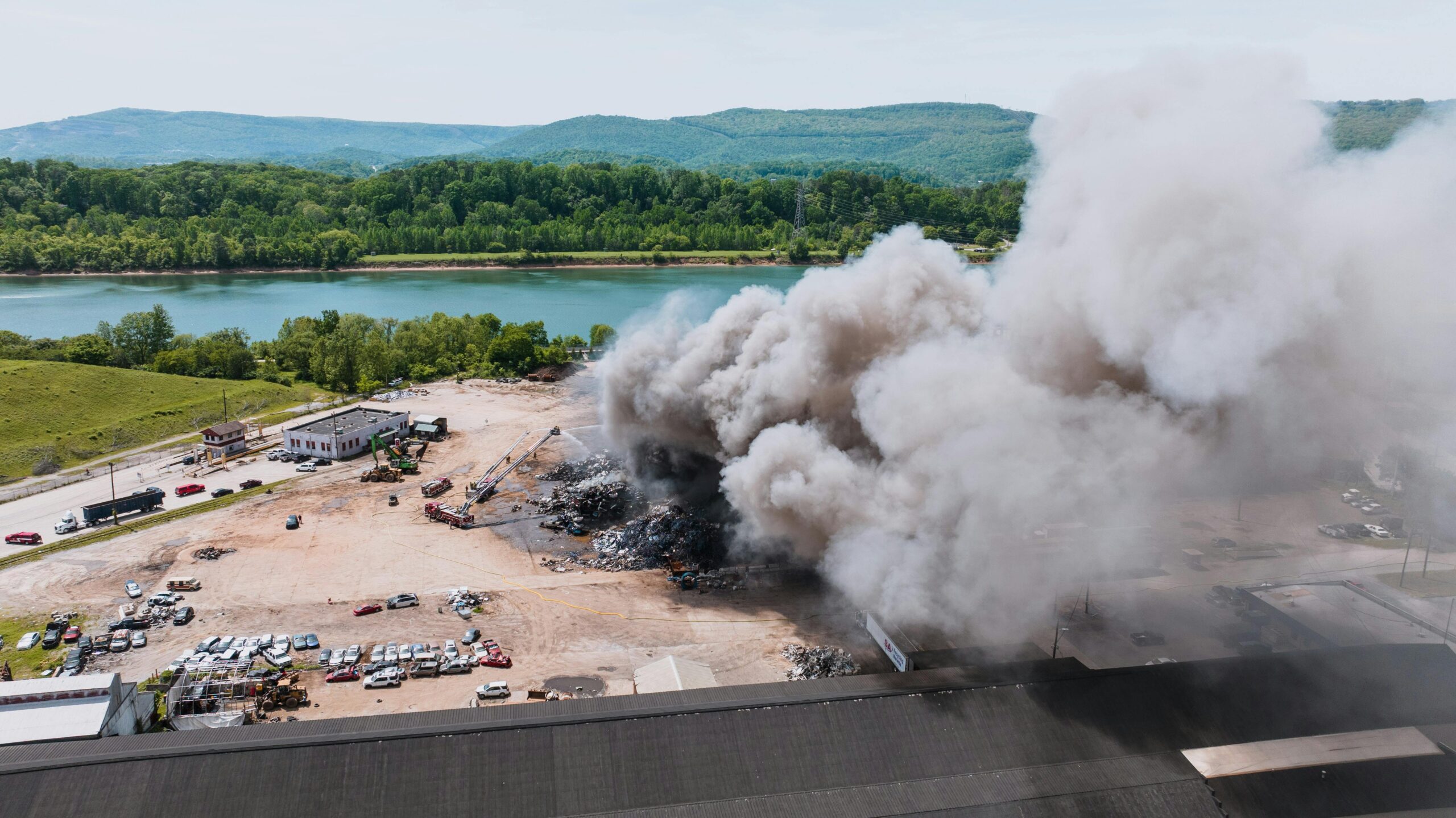
Understanding the difference between real smoke and false alarms has become increasingly critical in our technology-driven world of fire detection systems.

From residential buildings to industrial complexes, distinguishing genuine smoke events from nuisance alarms represents one of the most challenging aspects of modern fire safety. The temporal signatures of real smoke events—the unique patterns and characteristics that unfold over time—provide crucial insights that can dramatically improve detection accuracy and potentially save countless lives.
The ability to decode these temporal signatures has evolved significantly over recent decades, transforming from simple threshold-based detection to sophisticated multi-sensor analysis powered by artificial intelligence. This article delves deep into the science, technology, and practical applications of identifying real smoke through its distinctive temporal fingerprints.
🔬 The Science Behind Smoke Detection
Smoke particles behave in predictable yet complex ways that create identifiable patterns when monitored over time. Understanding these fundamental behaviors forms the foundation for all advanced detection systems.
Real smoke from combustion processes exhibits several distinct characteristics. The particle size distribution typically ranges from 0.01 to 10 micrometers, with the concentration increasing gradually during the early stages of a fire. The temporal evolution of smoke density follows specific curves that differ substantially from non-fire aerosols like steam, dust, or cooking vapors.
The optical properties of smoke particles change as fires develop. Freshly generated smoke particles from smoldering fires scatter light differently than particles from flaming combustion. These optical signatures evolve over seconds and minutes, creating temporal patterns that trained systems can recognize and classify.
Temperature and Humidity Interactions
The relationship between smoke, temperature, and humidity creates additional temporal markers. Real fire events generate heat that changes atmospheric conditions in measurable ways. The rate of temperature increase, combined with changes in relative humidity and smoke density, produces a multi-dimensional signature unique to genuine fire scenarios.
Water vapor from combustion affects humidity readings differently than steam from showers or cooking. These differences manifest over time scales ranging from seconds to minutes, providing detection algorithms with valuable discrimination data.
⏱️ Temporal Patterns That Reveal Truth
The time-dependent behavior of smoke concentrations serves as nature’s authentication mechanism. Real fires rarely produce instant, full-intensity smoke clouds. Instead, they follow developmental patterns that reflect the underlying combustion chemistry and physics.
Smoldering fires typically show a gradual, exponential increase in smoke concentration over periods ranging from several minutes to hours. The growth rate accelerates as more material becomes involved, creating a characteristic curve that differs markedly from temporary aerosol events.
Flaming fires produce faster temporal signatures but still exhibit recognizable patterns. The initial spike in particle concentration is followed by sustained or increasing levels, unlike cooking smoke or aerosol sprays that peak quickly and then dissipate.
The Critical First Minutes
Analysis of the first three to five minutes of smoke detection provides the most discriminating information. During this window, real fires demonstrate persistence and growth, while false alarm sources typically show rapid appearance followed by decline or erratic behavior.
Modern detection algorithms sample air quality parameters multiple times per second, building temporal profiles that capture these subtle but crucial differences. Machine learning models trained on thousands of real fire and non-fire events can recognize patterns invisible to simpler threshold-based systems.
🤖 Advanced Technologies Decoding Temporal Signatures
The evolution from simple smoke detectors to intelligent fire detection systems represents a quantum leap in our ability to decode temporal signatures. Multi-criteria detection approaches combine inputs from various sensors to build comprehensive temporal profiles.
Aspirating smoke detection systems continuously sample air through networks of pipes, analyzing particle concentrations with extreme sensitivity. These systems can detect the earliest stages of smoke development, capturing temporal signatures long before conventional detectors activate.
Video-based smoke detection analyzes the visual characteristics of smoke movement, density changes, and spatial propagation over time. The temporal evolution of smoke patterns visible in video feeds provides complementary data that enhances classification accuracy.
Machine Learning Revolution
Artificial intelligence algorithms have transformed temporal signature analysis. Neural networks trained on extensive datasets can identify complex patterns across multiple dimensions simultaneously—smoke density, rate of change, temperature progression, humidity variations, and spectral characteristics.
These systems learn to recognize the “shape” of real fire events in multi-dimensional temporal space. They distinguish between the smooth, persistent growth of actual fires and the choppy, transient signatures of nuisance sources with accuracy rates exceeding 95% in controlled environments.
Deep learning approaches analyze sequences of sensor readings as time-series data, similar to how speech recognition systems process audio. This temporal analysis captures not just individual measurements but the dynamic relationships between measurements over time.
📊 Comparing Real Events and False Alarms
Understanding what distinguishes true smoke from imposters requires examining specific examples and their characteristic temporal signatures.
| Source | Rise Time | Peak Duration | Temperature Change | Persistence |
|---|---|---|---|---|
| Smoldering Fire | 5-30 minutes | Sustained/Increasing | Gradual rise | Continuous |
| Flaming Fire | 30 seconds – 5 minutes | Sustained/Increasing | Rapid rise | Continuous |
| Cooking Smoke | 10-60 seconds | 1-5 minutes | Minor or none | Decreasing |
| Steam | 5-30 seconds | 30 seconds – 3 minutes | None or cooling | Rapid dissipation |
| Aerosol Spray | Instant | 10-60 seconds | None | Fast clearing |
| Dust Cloud | Instant | 30 seconds – 2 minutes | None | Settling pattern |
This comparison reveals key discriminating factors. Real fires show persistence—they don’t disappear quickly. They demonstrate growth or sustained intensity rather than immediate decline. Temperature changes accompany smoke production in genuine fire scenarios but remain absent or contradictory in false alarm situations.
🏢 Real-World Applications and Case Studies
The practical implementation of temporal signature analysis has revolutionized fire safety across various sectors, each presenting unique challenges and requirements.
Healthcare Facilities
Hospitals and nursing homes represent high-stakes environments where false alarms create dangerous disruptions, yet missing real fires could prove catastrophic. Advanced systems analyzing temporal signatures have reduced nuisance alarms by up to 80% while maintaining 100% detection of actual fire events during extensive trials.
These facilities commonly experience steam from autoclaves, cooking activities, and aerosol medications—all potential false alarm sources. Temporal analysis distinguishes these brief events from the sustained signatures of real fires, allowing staff to focus on patient care rather than repeated false evacuations.
Data Centers and Clean Rooms
Environments with sensitive electronics require extremely early warning detection but cannot tolerate false alarms that might trigger suppression systems unnecessarily. Very early smoke detection apparatus (VESDA) systems sampling air continuously can detect combustion particles hours before visible smoke appears.
The temporal signatures in these ultra-sensitive systems reveal incipient fires through minute particle concentrations that grow slowly but persistently. Pattern recognition algorithms filter out transient particle events from activities like maintenance work or equipment operation.
Industrial Manufacturing
Manufacturing environments present perhaps the most challenging detection scenarios, with welding, cutting, grinding, and process equipment generating particles and heat that mimic fire signatures. Temporal analysis has proven essential in these settings.
Production facilities using multi-criteria detectors with temporal signature analysis report alarm rate reductions of 60-90% compared to conventional single-sensor systems, while actual fire detection remains robust and reliable.
🔍 Key Temporal Markers Experts Monitor
Fire safety professionals and detection system designers focus on several critical temporal characteristics when evaluating smoke events:
- Rate of rise: How quickly smoke concentration increases provides immediate discrimination between explosive false sources and developing fires
- Persistence threshold: Real fires maintain elevated smoke levels for extended periods, while most nuisance sources clear within minutes
- Growth acceleration: The second derivative of smoke concentration often reveals fires through accelerating growth patterns
- Multi-parameter correlation: Synchronized changes across smoke, temperature, CO levels, and other parameters indicate real combustion
- Spatial propagation: Real fires spread to adjacent detection zones in predictable temporal sequences
- Spectral evolution: Changes in particle size distribution and optical properties over time reflect ongoing combustion chemistry
⚡ Challenges in Temporal Analysis
Despite remarkable advances, decoding temporal signatures faces ongoing challenges that drive continued research and development.
Environmental variability affects how smoke behaves and propagates. Ventilation systems, building geometry, and seasonal conditions alter temporal patterns, requiring adaptive algorithms that learn local baseline behaviors.
The lag time between ignition and detection remains a critical concern. While temporal analysis improves discrimination, it inherently requires observing events over time. Balancing rapid response with accurate classification represents a fundamental tension in system design.
Emerging Fire Types
Modern materials and technologies create new combustion scenarios with unfamiliar temporal signatures. Lithium-ion battery fires, for example, can develop differently than traditional material fires. Detection systems must continuously evolve to recognize these emerging patterns.
The increasing prevalence of electric vehicles, energy storage systems, and advanced electronics demands ongoing research into their specific fire signatures and temporal characteristics.
🚀 Future Directions in Smoke Detection
The future of temporal signature analysis points toward increasingly sophisticated, interconnected, and intelligent systems.
Internet-connected detection networks will share data across buildings and even cities, building massive databases of temporal patterns. Cloud-based machine learning will continuously refine detection algorithms based on global experience rather than isolated local data.
Sensor fusion will expand beyond traditional smoke, heat, and CO detectors to incorporate video analytics, acoustic signatures, air chemistry analysis, and even olfactory sensors. The temporal relationships between these diverse data streams will provide unprecedented discrimination capability.
Predictive analytics may eventually enable systems to identify conditions likely to lead to fires before ignition occurs, moving from detection to true prevention based on temporal trends in building systems, equipment behavior, and environmental factors.
💡 Practical Implications for Building Managers
Understanding temporal signatures isn’t just academic—it offers concrete benefits for anyone responsible for fire safety in buildings.
When evaluating detection systems, prioritize multi-criteria devices with temporal analysis capabilities. While more expensive initially, these systems deliver substantial savings through reduced false alarms, lower maintenance costs, and improved safety performance.
Consider the specific nuisance alarm sources in your environment. Facilities with kitchens need different temporal analysis parameters than warehouses or server rooms. Work with fire safety professionals to configure systems appropriately for your use case.
Regular system testing should include verification of temporal analysis functions, not just basic alarm triggering. Ensure that your detection network correctly identifies and filters common nuisance sources while maintaining sensitivity to real fires.

🌍 The Broader Impact on Fire Safety
The ability to accurately decode temporal signatures of real smoke events extends far beyond reducing annoying false alarms. It fundamentally enhances fire safety outcomes across society.
Earlier, more reliable detection enables faster emergency response when it truly matters. Firefighters arrive sooner to actual fires because they’re not desensitized by frequent false calls. Building occupants take alarms seriously when they trust the system’s accuracy.
Insurance companies increasingly recognize the value of advanced detection systems, offering premium reductions for buildings equipped with temporal analysis capabilities. The reduced property loss and business interruption from both prevented fires and eliminated false alarms justify these incentives.
As climate change increases wildfire risks and urban density grows, the importance of reliable fire detection will only intensify. Technologies that decode temporal signatures represent essential tools for managing these emerging challenges.
The journey from simple smoke detectors to sophisticated temporal signature analysis systems reflects humanity’s ongoing quest to harness technology for safety. By understanding the unique time-dependent patterns of real smoke events, we’ve dramatically improved our ability to distinguish genuine threats from harmless disturbances. This capability saves lives, protects property, and allows people to live and work with greater confidence in their fire safety systems. As detection technologies continue advancing, the temporal signatures of smoke will reveal their secrets with ever-greater clarity, creating safer environments for everyone.