
Real-time forecasting systems are transforming how businesses and individuals make critical decisions by delivering instant weather insights and enabling rapid simulations for better planning.

⚡ The Power of Instant Decision-Making in a Fast-Paced World
In today’s hyper-connected environment, the ability to make informed decisions quickly has become a competitive advantage. Traditional forecasting methods that relied on periodic updates and delayed data processing are rapidly becoming obsolete. Real-time forecasting systems have emerged as game-changers, providing instantaneous weather insights and simulation capabilities that allow decision-makers to respond to changing conditions with unprecedented speed and accuracy.
Whether you’re managing agricultural operations, coordinating logistics, planning outdoor events, or optimizing energy consumption, access to real-time weather data can mean the difference between success and costly mistakes. These advanced systems leverage cutting-edge technology, including artificial intelligence, machine learning algorithms, and vast sensor networks to deliver predictions that are not only faster but significantly more accurate than ever before.
🌤️ Understanding Real-Time Forecasting Technology
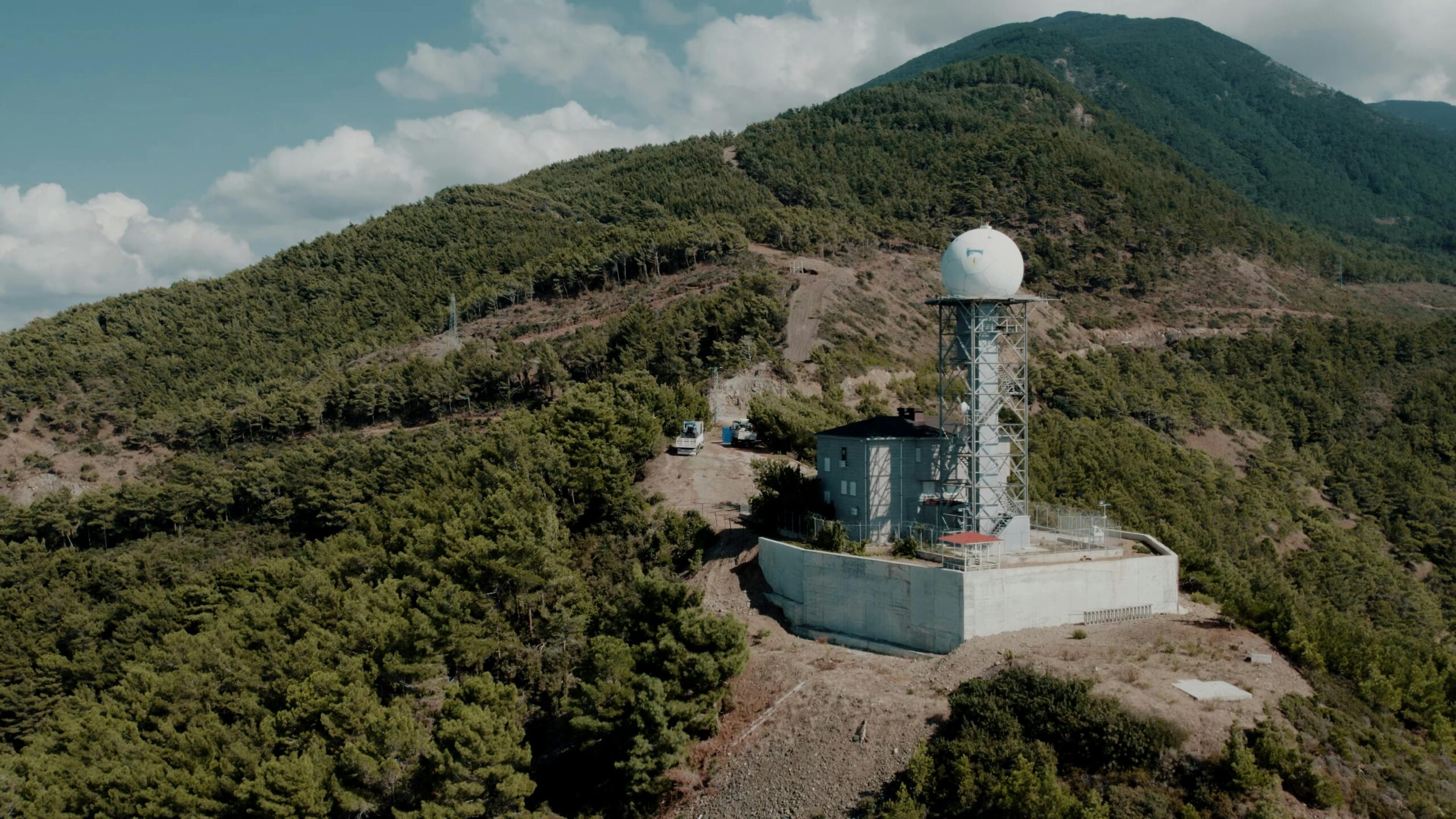
Real-time forecasting systems represent a quantum leap from conventional weather prediction models. These sophisticated platforms continuously ingest data from multiple sources—including weather stations, satellites, radar systems, ocean buoys, and even crowdsourced observations—to create dynamic, constantly updating forecasts that reflect current atmospheric conditions.
The technology behind these systems combines several key components. High-performance computing infrastructure processes massive datasets in milliseconds, while advanced algorithms identify patterns and trends that human analysts might miss. Machine learning models continuously improve their accuracy by learning from past predictions and outcomes, creating a self-improving forecasting ecosystem.
The Data Pipeline That Powers Instant Insights
Modern forecasting systems operate on a continuous data pipeline that never sleeps. Meteorological sensors distributed across the globe transmit readings every few seconds, creating a real-time picture of atmospheric conditions. This data flows through sophisticated processing systems that clean, validate, and integrate information from disparate sources into coherent forecasting models.
The integration of Internet of Things (IoT) devices has exponentially increased the granularity of available data. Personal weather stations, smart home sensors, and even connected vehicles contribute observations that enhance forecast accuracy at hyperlocal levels. This democratization of data collection has revolutionized our understanding of microclimates and localized weather phenomena.
🚀 Rapid Simulations: Testing Multiple Scenarios in Seconds
One of the most powerful features of modern forecasting systems is their ability to run multiple simulation scenarios almost instantaneously. Rather than providing a single predicted outcome, these platforms can generate dozens or even hundreds of possible futures, each based on slightly different initial conditions or assumptions.
This ensemble forecasting approach provides decision-makers with a probability distribution of potential outcomes rather than a single deterministic prediction. Understanding the range of possibilities and their relative likelihoods enables more nuanced risk assessment and contingency planning. A logistics manager, for example, can evaluate how different weather scenarios might impact delivery routes and prepare alternative plans accordingly.
Monte Carlo Methods and Probabilistic Forecasting
Advanced forecasting systems employ Monte Carlo simulation techniques to account for inherent uncertainty in weather prediction. These methods run thousands of simulations with slight variations in initial conditions, producing a statistical distribution of possible outcomes. The result is a forecast that communicates not just what is most likely to happen, but also the confidence level associated with that prediction.
This probabilistic approach transforms how organizations approach weather-dependent decisions. Instead of simply knowing there’s a chance of rain, decision-makers receive detailed information about the likelihood of different precipitation amounts at specific times, allowing for much more sophisticated planning.
🌍 Industry Applications Transforming Business Operations
The impact of real-time forecasting systems extends across virtually every industry sector. From agriculture to aviation, energy to entertainment, organizations are leveraging instant weather insights to optimize operations and reduce weather-related risks.
Agriculture: Precision Farming in the Digital Age
Farmers using real-time forecasting systems can make minute-by-minute decisions about irrigation, pesticide application, and harvest timing. These systems integrate weather data with soil moisture sensors and crop health indicators to provide actionable recommendations. A farmer might receive an alert that conditions in the next four-hour window are optimal for spraying, with minimal wind and no precipitation expected, maximizing effectiveness while minimizing environmental impact.
Precision agriculture platforms have transformed traditional farming practices by enabling data-driven decisions at field-specific and even plant-specific levels. Real-time frost warnings, heatwave predictions, and rainfall forecasts help farmers protect crops and optimize yield while reducing resource waste.
Transportation and Logistics: Navigating Weather Challenges
Transportation companies leverage real-time forecasting to optimize routing, prevent delays, and enhance safety. Aviation relies heavily on these systems for flight planning, with pilots receiving continuous updates about turbulence, wind patterns, and visibility conditions along their routes. Ground transportation benefits similarly, with trucking companies rerouting vehicles around severe weather and maritime shipping adjusting course to avoid storms.
The integration of forecasting systems with fleet management software creates intelligent transportation networks that automatically adapt to changing conditions. Delivery services can provide customers with accurate arrival windows that account for weather impacts, while also ensuring driver safety during hazardous conditions.
Energy Sector: Balancing Supply and Demand
The energy industry has become increasingly dependent on accurate weather forecasting as renewable sources like wind and solar have grown. Real-time forecasting systems predict energy generation potential hours or days in advance, allowing grid operators to balance supply with anticipated demand. These predictions are crucial for maintaining grid stability and optimizing the deployment of backup power sources.
Utility companies use rapid simulations to stress-test their infrastructure against various weather scenarios, identifying vulnerabilities before storms strike. This proactive approach reduces outage duration and improves service reliability, particularly during extreme weather events.
📱 Consumer Applications Bringing Forecasting to Your Fingertips
Real-time forecasting isn’t limited to large organizations with specialized equipment. Consumer-facing applications have democratized access to sophisticated weather insights, putting powerful forecasting tools in the hands of everyday users.
Modern weather apps go far beyond simple temperature displays. They provide minute-by-minute precipitation predictions, hourly forecasts with confidence intervals, and customizable alerts for specific weather conditions. Whether you’re planning a weekend hike, deciding when to mow the lawn, or preparing for your commute, these applications deliver precisely timed insights tailored to your location and needs.
Hyperlocal Forecasting for Personal Planning
The most advanced consumer forecasting applications now offer hyperlocal predictions accurate to specific streets or neighborhoods. This granularity is particularly valuable in areas with complex topography or microclimates where conditions can vary dramatically over short distances. A user in San Francisco, for example, might receive different forecasts for the Mission District versus the Sunset District, reflecting the significant climate differences between these nearby neighborhoods.
Smart notification systems learn user preferences and behavior patterns, delivering weather alerts only when conditions deviate meaningfully from the norm or when specific thresholds are crossed. This intelligent filtering prevents alert fatigue while ensuring users receive critical information when it matters most.
🔬 The Science Behind Accuracy Improvements
The dramatic improvements in forecast accuracy over recent decades stem from advances in multiple scientific disciplines. Computational power has increased exponentially, allowing models to incorporate more variables and run at higher resolutions. Our understanding of atmospheric physics has deepened, enabling more accurate representation of complex processes like cloud formation and ocean-atmosphere interactions.
Satellite technology has revolutionized data collection, providing continuous observations of global weather patterns from space. Modern weather satellites capture images in multiple spectral bands, measuring not just visible light but also infrared radiation, water vapor content, and other atmospheric properties. This multi-dimensional view of Earth’s weather systems feeds into forecasting models, significantly improving prediction accuracy.
Machine Learning: The Next Frontier
Artificial intelligence and machine learning are pushing forecast accuracy to new heights. These technologies excel at identifying subtle patterns in massive datasets that traditional statistical methods might miss. Neural networks trained on decades of historical weather data can recognize precursors to specific weather events, improving early warning systems for severe weather.
Deep learning models are particularly effective at short-term forecasting, where they can process current observations and recent trends to make highly accurate predictions for the next few hours. This “nowcasting” capability is invaluable for time-sensitive decisions like outdoor event management or emergency response coordination.
⚡ Integration with Business Intelligence Systems
Forward-thinking organizations are integrating real-time forecasting systems directly into their business intelligence platforms, creating unified decision-making environments. This integration allows weather data to flow seamlessly into operational dashboards alongside sales figures, inventory levels, and other business metrics.
A retail chain, for instance, might automatically adjust inventory distribution based on regional weather forecasts, ensuring ice cream trucks are stocked in areas expecting heat waves while redirecting umbrella shipments to regions anticipating rain. This weather-aware supply chain management reduces waste and maximizes sales opportunities.
Automated Decision Triggers
The most sophisticated implementations include automated decision triggers that initiate specific actions when forecasted conditions meet predefined criteria. Construction companies might automatically schedule concrete pours when a 48-hour dry window is predicted, while event organizers receive automatic notifications when forecasts suggest the need for contingency plans.
These automated systems reduce the cognitive load on decision-makers while ensuring consistent, data-driven responses to weather conditions. Human judgment remains crucial for complex decisions, but automation handles routine choices that follow established protocols.
🌐 The Global Collaboration Behind Better Forecasts
Accurate weather forecasting is inherently a global endeavor. Atmospheric systems don’t respect national boundaries, and a storm developing over the Pacific Ocean today might affect North American weather next week. International cooperation and data sharing are fundamental to forecast accuracy worldwide.
Organizations like the World Meteorological Organization coordinate global observation networks and facilitate data exchange between countries. This collaboration ensures that forecasters everywhere have access to comprehensive global data, improving predictions for all nations regardless of their individual meteorological infrastructure.
🔮 Future Developments: What’s Coming Next
The evolution of real-time forecasting systems continues to accelerate. Quantum computing promises to revolutionize weather modeling by enabling simulations of unprecedented complexity and resolution. These next-generation systems will capture atmospheric dynamics at scales currently impossible, potentially extending accurate forecast horizons and improving extreme weather prediction.
The proliferation of connected devices will create ever-denser observation networks. Autonomous vehicles equipped with environmental sensors will become mobile weather stations, contributing real-time data about road conditions, visibility, and precipitation. This crowdsourced observation network will enhance nowcasting capabilities and improve understanding of localized weather phenomena.
Climate-Weather Integration
Future systems will increasingly blur the line between weather forecasting and climate prediction, providing seamless insights across temporal scales. Decision-makers will access integrated platforms that offer next-hour precipitation predictions alongside seasonal outlooks and long-term climate projections, enabling strategic planning that accounts for both immediate conditions and emerging trends.
🎯 Making the Most of Real-Time Forecasting Tools
To maximize the value of real-time forecasting systems, organizations and individuals should develop weather-aware decision-making frameworks. This means identifying which decisions are weather-sensitive, establishing clear criteria for when weather conditions should trigger specific actions, and training personnel to interpret and act on forecasting data effectively.
Regular review of forecast accuracy for your specific location and use case helps calibrate expectations and refine decision protocols. Understanding the typical accuracy ranges for different forecast horizons enables appropriate confidence levels in planning. A 12-hour forecast is generally highly reliable, while predictions beyond a week should inform strategic thinking rather than tactical decisions.
Building Weather Resilience
The ultimate goal of leveraging real-time forecasting systems is building organizational and personal resilience to weather variability. This means using forecast insights not just reactively but proactively, identifying vulnerabilities and implementing measures to reduce weather-related risks before they materialize.
Organizations that embrace weather intelligence as a core competency position themselves for competitive advantage in an increasingly volatile climate. The ability to anticipate and adapt to weather conditions faster and more effectively than competitors creates operational efficiencies and enhances customer satisfaction across countless scenarios.
🌟 Transforming Decision-Making for a Weather-Aware Future
Real-time forecasting systems represent more than just technological advancement—they embody a fundamental shift in how we relate to weather and climate. No longer passive recipients of whatever conditions nature delivers, we’ve gained the ability to anticipate, prepare, and adapt with remarkable precision. This weather awareness transforms uncertainty into manageable risk and enables opportunities that would otherwise remain invisible.
The organizations and individuals who embrace these tools most effectively will thrive in our increasingly complex and dynamic world. By integrating instant weather insights and rapid simulations into decision-making processes, we can optimize operations, reduce risks, and seize weather-dependent opportunities with confidence. The revolution in forecasting technology isn’t coming—it’s already here, reshaping decisions and outcomes across every sector of society.
As these systems continue evolving, becoming more accurate, accessible, and integrated into our daily tools, the gap between weather-aware and weather-blind decision-making will only widen. The future belongs to those who can harness the power of real-time forecasting to navigate an uncertain world with clarity and confidence.